Defense – US Lawmakers Question Trump’s Stability During Pentagon Hearing
Defense – Amid heightened tensions linked to Iran, a congressional hearing in Washington turned sharply political as lawmakers questioned senior officials over President Donald Trump’s conduct and decision-making.
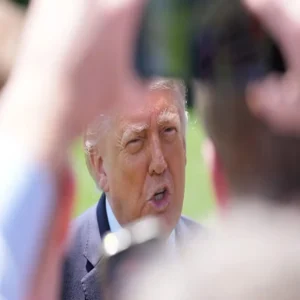
A tense exchange unfolded on Capitol Hill when US Defence Secretary Pete Hegseth faced pointed questions about President Trump’s mental fitness to serve as commander-in-chief. The moment, captured during a congressional hearing, quickly gained traction online after Hegseth declined to give a direct answer, instead choosing to defend the president.
Lawmaker presses for clarity on leadership concerns
During the session, Democratic Representative Sara Jacobs asked Hegseth a straightforward question: whether Trump was mentally stable enough to lead the armed forces. Rather than responding with a clear affirmation or denial, the defence secretary redirected the discussion.
Hegseth countered by questioning whether similar scrutiny had been applied to former President Joe Biden during his tenure. Jacobs responded that the comparison was not relevant, noting that Trump has been in office for over a year and a half and is the current decision-maker.
The exchange grew heated as Hegseth rejected what he described as disparaging remarks toward the sitting president. He emphasized that Trump prioritizes military personnel and described him as a strong leader, though he stopped short of directly addressing the original question.
Broader hearing focused on defense spending plans
The hearing extended beyond political debate, with lawmakers also examining the administration’s proposed military budget for 2027. The plan outlines a significant increase in defense spending, with a proposed allocation of $1.5 trillion—an unprecedented figure in US history.
Hegseth defended the proposal, stating that it is intended to strengthen military readiness and address what he characterized as years of insufficient investment. According to his testimony before the Senate Armed Services Committee, the funding would support modernization efforts, expand industrial capabilities, and improve living conditions for service members.
Among the highlights, the proposal includes a planned pay increase of around seven percent for junior enlisted personnel. It also aims to upgrade or replace substandard military housing, an issue that has drawn criticism in recent years.
Hegseth described the budget as a long-term strategy to ensure that the United States maintains a technological and operational edge. He argued that the ability to rapidly develop and deploy advanced systems is essential for national security and global deterrence.
Social media posts add to growing concerns
The questioning of Trump’s leadership comes amid renewed tensions involving Iran and stalled diplomatic efforts. In recent weeks, the president has posted a series of late-night messages on social media that have drawn criticism for their tone and content.
Some of these posts included strong warnings directed at Iran, with one message suggesting severe consequences that raised alarm among observers. Critics argue that such statements, particularly when made during sensitive geopolitical situations, can escalate tensions unnecessarily.
Another post that attracted widespread attention featured an AI-generated image portraying Trump in a symbolic, almost religious form. The image was later removed following public backlash, though the president defended it as a representation of healing and leadership.
Political divide deepens over presidential conduct
The developments have intensified debate in Washington, with opposition lawmakers raising concerns about the president’s communication style and decision-making approach. Supporters, however, maintain that Trump’s assertive stance reflects strength and determination in dealing with international challenges.
The congressional hearing underscored the widening divide between political parties over how presidential behavior should be evaluated, especially during periods of global uncertainty.
As discussions continue around defense policy and foreign relations, the focus on leadership and accountability is likely to remain a central issue in upcoming legislative sessions.