Judiciary – Supreme Court declines further intervention in hate speech cases
Judiciary – The Supreme Court of India has brought an end to a series of petitions concerning alleged inaction against hate speech, stating that existing criminal laws are adequate to handle such offences. The court made it clear that there is no gap in legislation and that individuals seeking justice can approach appropriate legal forums under current provisions.
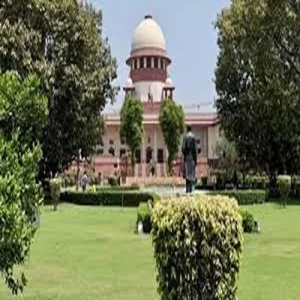
Court underlines limits of judicial authority
In its ruling, the court emphasized that creating new criminal offences falls strictly within the jurisdiction of the legislature, not the judiciary. It rejected the argument that hate speech lacks proper legal coverage, describing such claims as misguided. By closing contempt proceedings against state authorities, the bench signaled that responsibility for enforcement lies with existing institutions rather than new judicial directives.
Years of petitions and judicial engagement
The issue of hate speech has occupied the court’s attention for several years, particularly since the pandemic period. Early petitions raised concerns about phrases like “corona jihad,” which were seen as communalizing the spread of COVID-19. Around the same time, legal challenges were also filed against controversial television content that allegedly promoted divisive narratives.
Subsequent cases emerged from religious gatherings, including events where inflammatory speeches reportedly called for violence and social exclusion. These incidents led to a surge of petitions from activists, journalists, and civil society groups, highlighting what they described as a pattern of administrative inaction.
Earlier interventions and strong directives
In earlier phases, the court took a proactive stance. In 2020, it intervened to halt the broadcast of contentious programming. Later, in 2022, it directed law enforcement agencies to register cases independently when incidents of communal hate speech came to light, without waiting for formal complaints.
This approach was reinforced in April 2023, when the court expanded its directive nationwide. It instructed police authorities across all states and union territories to act swiftly against hate speech, regardless of the speaker’s background. The bench stressed that maintaining the country’s secular fabric was essential and warned officials that failure to act could lead to contempt proceedings.
Shift towards institutional restraint
However, by late 2024 and into 2025, the court began to reassess its role. Judges noted that the judiciary could not function as a continuous monitoring authority for such issues. They highlighted the importance of maintaining the balance of power among institutions, observing that law enforcement agencies and lower courts must fulfill their responsibilities independently.
The introduction of updated criminal laws, including the Bharatiya Nyaya Sanhita and Bharatiya Nagarik Suraksha Sanhita, was also cited as a significant factor. According to the bench, these legislative developments have sufficiently addressed concerns related to hate speech, leaving no legal vacuum.
Final closure of long-pending cases
On January 20, 2026, the court formally dismissed a group of pending petitions, effectively concluding nearly six years of judicial involvement in hate speech matters. While doing so, it preserved the right of petitioners to seek remedies through established legal channels.
One case remains under limited review, focusing on the progress of trial proceedings related to an alleged hate crime reported in 2021. Apart from this exception, the court has stepped back from broader oversight, marking a clear shift in its approach.
A changing legal landscape
The court acknowledged that hate speech continues to pose challenges to social harmony and constitutional values. However, it maintained that addressing these issues requires coordinated action from legislative and executive bodies rather than expanded judicial intervention.
This development reflects an evolving interpretation of institutional roles, with greater emphasis now placed on statutory mechanisms and administrative accountability. As the legal framework continues to develop, the responsibility for enforcing laws against hate speech will rest primarily with authorities tasked with implementing them.