Elections – Record Turnout Marks First Phase of West Bengal Polls
Elections – A remarkable voter turnout of 92.7 percent was recorded during the opening phase of the West Bengal Assembly elections, drawing attention from legal and political circles alike. The figure, significantly higher than previous elections, was noted with appreciation by members of the judiciary, who described it as a positive signal for the country’s democratic framework.
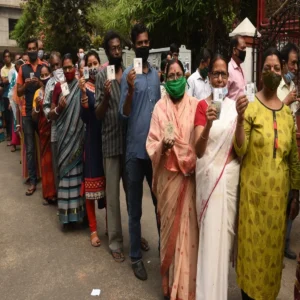
Strong Participation Reflects Public Engagement
During court proceedings, Chief Justice of India Surya Kant expressed satisfaction over the high level of participation. He observed that when citizens actively take part in elections, it reinforces the strength of democratic institutions. The turnout in this phase surpassed expectations and stood out when compared to earlier elections in the state.
Senior advocate Kalyan Banerjee informed the court that many migrant workers had returned to West Bengal from different parts of the country specifically to cast their votes. This movement of voters underlined the importance people attach to their electoral rights, even when it involves long-distance travel.
Peaceful Voting with Minor Disruptions
Solicitor General Tushar Mehta noted that the polling process was largely peaceful. While isolated incidents were reported in certain areas, they did not significantly disrupt the overall voting exercise. Authorities had made extensive security arrangements to ensure smooth conduct, deploying more than 2,400 companies of central paramilitary forces.
These forces were stationed across over 44,000 polling booths to maintain order and prevent disturbances. Despite these measures, a few pockets witnessed sporadic unrest, though officials indicated that the situation remained under control throughout the day.
Judicial Observations Highlight Ground Realities
Justice Joymalya Bagchi, while commenting on the electoral environment, referred to a traditional saying that reflects how conflicts among powerful entities often affect ordinary people the most. His remark subtly pointed to the broader social context in which elections are conducted, where common citizens bear the consequences of political tensions.
The judiciary’s observations during the hearing highlighted both the encouraging aspects of voter participation and the challenges that persist during large-scale electoral exercises.
Scale and Significance of First Phase Voting
The first phase of polling, conducted on April 23, covered 152 constituencies. Approximately 3.6 crore voters were eligible to participate in this phase. The turnout of 92.7 percent marked a notable increase from the 84 percent recorded during the first phase of the 2021 Assembly elections in the state.
Election officials described the turnout as one of the highest in recent years, indicating heightened public interest in the electoral process. Analysts suggest that such strong participation can influence the overall outcome and reflects increased political awareness among voters.
Upcoming Phases and Final Results
The election process in West Bengal is being conducted in multiple phases. The remaining 142 constituencies are scheduled to vote on April 29. Authorities are continuing preparations to ensure that the next phase proceeds smoothly, with similar security arrangements expected to be in place.
The counting of votes is set for May 4, when the final results will determine the composition of the state assembly. Political parties and candidates are closely monitoring voter trends from the first phase as they prepare for the next round of polling.