Parliament – Modi Highlights Delay and Urgency in Women Reservation Bill
Parliament – The debate over women’s participation in legislative bodies gained fresh attention after Prime Minister Narendra Modi addressed the Lok Sabha, emphasizing both the delayed journey and future significance of the Women’s Reservation Bill.
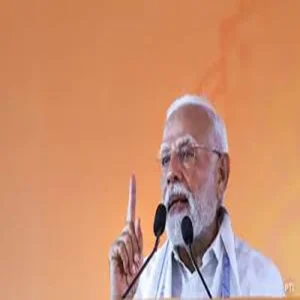
Prime Minister Narendra Modi on Thursday described the long-awaited push for women’s reservation in legislatures as a step that should have been taken decades ago. Speaking in the Lok Sabha, he reflected on how the proposal first emerged nearly 25 to 30 years ago but was not implemented at the time. According to him, early adoption would have allowed the policy to evolve gradually and reach a more refined stage by now.
Missed Opportunity in Earlier Decades
The Prime Minister noted that if the bill had been enacted when it was first discussed, it could have undergone continuous improvements over the years. He pointed out that such gradual evolution is a hallmark of democratic systems, where policies are refined through experience and feedback. The delay, he suggested, has prevented the country from fully benefiting from the potential of increased women’s participation in governance.
At the same time, the issue has become a point of contention between the government and the Opposition. Critics have argued that although the bill was passed unanimously in Parliament in 2023, there has been little progress toward its actual implementation. Opposition leaders maintain that the government could have introduced the 33 percent reservation within the existing Lok Sabha framework instead of linking it to future delimitation exercises.
A Defining Moment in Parliamentary History
In his address, Modi described the Women’s Reservation Bill as one of those rare and defining moments in a nation’s history. He said that such moments depend not only on circumstances but also on the leadership’s ability to act decisively. According to him, the current phase represents a significant chapter in India’s parliamentary journey.
He stressed that decisions taken during such periods shape long-term national identity and institutional legacy. The bill, in his view, has the potential to leave a lasting impact on how democracy functions in the country by broadening representation.
Beyond Political Gains
The Prime Minister also rejected the idea that the move would benefit any single political party. Instead, he framed it as a step toward strengthening democratic values. He warned that resistance to women’s political empowerment has historically come at a cost, noting that those who opposed such measures in the past faced public backlash, particularly from women voters.
He further observed that over the last two and a half decades, a large number of women have emerged as leaders at the grassroots level. From local governance bodies to community leadership roles, women have steadily built a presence in public life. Modi argued that this growing base of leadership must now be reflected in higher legislative institutions.
Growing Role of Women in Governance
Highlighting the need for inclusivity, the Prime Minister said that political systems must evolve to recognize the contributions of women leaders. He emphasized that ignoring this shift would be a mistake and could have long-term political consequences for those who oppose it.
He pointed out that women’s leadership is no longer limited to symbolic representation. Instead, it has become an integral part of governance at various levels, making it essential to ensure their participation in national decision-making processes.
Vision of Inclusive Development
Linking the issue to the broader vision of a developed India, Modi said that progress should not be measured solely by infrastructure or economic indicators. He reiterated the importance of inclusive growth, where every section of society has a role in shaping policies.
According to him, true development requires equal participation, especially when women constitute nearly half of the population. Ensuring their involvement in decision-making, he said, is not just a matter of representation but a necessity for balanced and sustainable progress.
The Prime Minister concluded by underlining that the time has come to align democratic structures with the evolving aspirations of society. Expanding women’s role in governance, he suggested, is a crucial step toward building a more inclusive and forward-looking nation.