Sanctions – Iranian Supertanker Reaches Home Despite US Naval Blockade
Sanctions – The arrival of a large Iranian oil tanker at its home port has drawn attention amid escalating restrictions imposed by the United States on maritime movement linked to Iran.
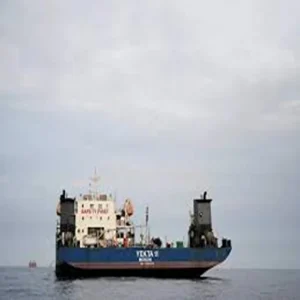
The vessel, described as a very large crude carrier (VLCC), reportedly completed its journey despite being under US sanctions. According to a statement shared by Iran’s consulate general in Mumbai, the tanker moved through international waters and passed the Strait of Hormuz without attempting to hide its identity or route.
Tanker Movement Challenges US Restrictions
The consulate highlighted that the ship maintained an active tracking system throughout its voyage. This detail is significant, as vessels under sanctions often attempt to obscure their movements to avoid detection. By keeping its transponder on, the tanker effectively signaled its presence while navigating a region currently under heightened scrutiny.
Officials noted that the vessel, capable of transporting up to two million barrels of crude oil, reached Iranian territory without facing any direct obstruction. The move is being viewed as a symbolic response to US warnings aimed at limiting maritime access to Iranian ports.
US Announces Sweeping Maritime Blockade
The development comes shortly after the United States declared a broad enforcement action targeting ships connected to Iran. US authorities stated that vessels departing from Iranian ports or engaging in trade involving Iranian tolls would be intercepted.
According to statements from US Central Command, the blockade has been fully operational. Officials claimed that within a short period of implementation, maritime trade involving Iran had been significantly disrupted. They further asserted that a large portion of Iran’s economy depends on sea-based commerce, making such measures impactful.
Continued Shipping Activity Through Strategic Waters
Despite the restrictions, shipping activity linked to Iran has not completely halted. The Strait of Hormuz, a narrow yet crucial global shipping route, continues to witness vessel movement tied to Iranian trade.
Reports from maritime tracking services indicated that at least two additional ships recently navigated the strait. One of them, a bulk carrier sailing under a Liberian flag, had delivered agricultural cargo at an Iranian port before proceeding through the waterway.
Another vessel, a tanker registered in Comoros, was observed carrying a substantial quantity of methanol. It had departed from an Iranian port earlier and successfully crossed the strait within hours of the blockade’s enforcement.
Strategic and Economic Implications
The situation highlights the ongoing tension between enforcement measures and actual maritime activity in the region. While the United States aims to restrict Iran’s economic channels through sea routes, the continued movement of ships suggests challenges in fully controlling such a critical international corridor.
The Strait of Hormuz remains one of the most vital passages for global energy supply, and any disruption or defiance in this area carries wider implications. The recent movement of the sanctioned tanker underscores the complexity of enforcing maritime restrictions in international waters.
Uncertain Outlook for Regional Shipping
As tensions persist, the effectiveness of the blockade and its long-term impact remain uncertain. Analysts suggest that while enforcement may slow trade, completely halting it could prove difficult given the strategic importance of the region and the volume of global shipping that passes through it.
For now, the arrival of the Iranian supertanker stands as a notable development, reflecting both the resilience of maritime operations and the evolving dynamics of geopolitical pressure in one of the world’s busiest shipping routes.