Defense – Iran Reports Use of New Air Defence System Against US Drone Near Hormuz
Defense – Iran has announced that it successfully used a newly introduced air defence platform to bring down a United States MQ-9 Reaper drone near the strategically important Strait of Hormuz earlier this week. According to reports carried by Iranian state-affiliated media, the drone was intercepted close to Qeshm Island using a domestically developed system known as Arash-e-Kamangir. The MQ-9 Reaper is among the most widely used surveillance and strike drones in the US military fleet and is estimated to cost between $16 million and $30 million per unit.
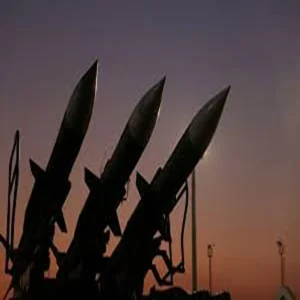
First Reported Operational Use
If Tehran’s account is accurate, the incident would represent the first known operational deployment of the Arash-e-Kamangir system. The defence platform takes its name from Arash, a legendary figure from Persian mythology known for defining territorial boundaries with a single arrow. Iranian officials described the reported interception as evidence that the country’s military remains capable of defending its airspace despite months of regional tensions and military confrontations.
Iranian media outlets stated that the drone was targeted during a mission aimed at protecting national airspace and maritime borders. Officials quoted by local news agencies said the operation demonstrated the effectiveness of a defence system with capabilities that have not previously been disclosed publicly.
Independent Verification Still Absent
Despite the claims, there has been no independent confirmation of the incident. International observers and defence analysts have noted that information released by Iranian authorities often requires careful assessment because external verification is frequently limited.
However, specialists say the broader concept behind the claim is not unrealistic. Iran has spent years investing in locally manufactured defence technologies, particularly systems designed to counter drones and aircraft while reducing dependence on large radar installations that can be more easily detected and targeted.
Experts Point to Iran’s Growing Self-Reliance
Security experts believe Iran has made notable progress in developing missile and air defence technology. Mark Hilborne, a senior lecturer in security studies at King’s College London, told Al Jazeera that Iran has become increasingly capable of producing its own military systems and adapting to the changing economics of modern warfare.
According to analysts, one of Tehran’s key strategies has been focusing on lower-cost weapons that can challenge more expensive military platforms. Iran’s continued production and deployment of Shahed drones is often cited as an example of this approach, allowing the country to maintain military pressure while managing costs over extended periods.
What Is the Arash-e-Kamangir System?
Military analysts suggest that the newly named system may not represent a dramatic technological breakthrough but rather an evolution of Iran’s existing mobile air defence network. Unlike conventional air defence batteries that rely on fixed radar sites and large launch systems, smaller mobile platforms can be relocated quickly and concealed more effectively.
The flexibility of such systems makes them harder to track and potentially more resilient during conflict. Their lower production costs can also make replacement easier if equipment is lost or damaged.
Possible Design and Capabilities
Alex Almeida, a security analyst with the strategic intelligence platform Horizon Engage, told Al Jazeera that the system could be connected to other short-range Iranian air defence technologies already in service. He suggested that it may use electro-optical sensors or heat-seeking guidance instead of relying entirely on traditional radar networks.
Some reports indicate that certain Iranian interceptor systems are capable of remaining airborne while waiting for potential targets. These designs are intended to counter drones and aircraft at relatively short distances and are generally less complex than large-scale air defence systems.
Why the MQ-9 Reaper Could Be Vulnerable
The MQ-9 Reaper is primarily designed for surveillance and intelligence-gathering missions. Because it operates at relatively moderate speeds compared with fighter aircraft, analysts say it can be more vulnerable to specific types of air defence weapons.
Nicole Grajewski, an assistant professor at Sciences Po University in Paris, noted that while Iran may still require stronger medium- and long-range defence capabilities, mobile systems provide important operational advantages. She explained that rapidly deployable launch platforms can be repositioned quickly and may remain effective against certain aerial targets. While questions remain about the altitude and circumstances of the reported drone flight, she said the incident could indicate that Iran continues to maintain functional air defence assets.