Diplomacy – China Sets Firm Conditions Ahead of Trump-Xi Beijing Talks
Diplomacy – As preparations intensify for high-level discussions between Washington and Beijing, China has once again outlined the key boundaries it believes should not be crossed in bilateral relations with the United States.
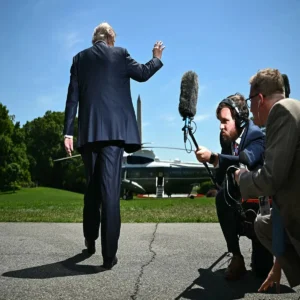
Ahead of US President Donald Trump arriving in Beijing for a two-day diplomatic visit, Chinese officials publicly stressed four major areas that they consider fundamental to maintaining stable ties between the world’s two largest economies. The message was delivered through statements issued by the Chinese Embassy in the United States and echoed by government representatives in Beijing.
Beijing Repeats Its ‘Red Line’ Position
In a social media statement, the Chinese Embassy described four issues as non-negotiable in China-US relations. These included Taiwan, democracy and human rights matters, political systems, and China’s development interests. Chinese officials said these subjects represent core national concerns and should not be challenged during talks between President Trump and Chinese President Xi Jinping.
The embassy also called for a “constructive and stable” relationship between the two nations, adding that mutual respect and peaceful cooperation remain essential for long-term engagement between Beijing and Washington.
The framework of these four “red lines” was first introduced by President Xi during a meeting with former US President Joe Biden in late 2024. Since then, Chinese authorities have repeatedly used the phrase while responding to growing tensions with the United States.
Taiwan Expected to Dominate Discussions
Taiwan is likely to become one of the most sensitive subjects during the summit. China considers the self-governed island part of its territory and strongly opposes foreign military support for Taipei.
Speaking in Beijing, Zhang Han, spokesperson for China’s Taiwan Affairs Office, criticised continued US arms sales to Taiwan and described the matter as an internal Chinese issue. She stated that Beijing firmly rejects any form of military cooperation between Washington and Taiwan.
Chinese officials also reiterated that Taiwan represents one of Beijing’s most important national interests. According to the government, the United States should honour commitments made under previous diplomatic understandings related to the “One China” policy.
The US government officially acknowledges Beijing’s position that Taiwan is part of China, although Washington does not formally recognise Chinese sovereignty over the island. At the same time, American law requires the United States to help Taiwan maintain its defensive capabilities.
Weapons Package Adds to Diplomatic Pressure
Relations between the two countries became more strained after the Trump administration approved a major weapons package for Taiwan in December. The military deal, valued at approximately $11 billion, marked the largest arms agreement ever announced between Washington and Taipei.
Chinese officials have repeatedly condemned such defence arrangements, arguing that they undermine regional stability and interfere in Chinese domestic affairs.
The issue is expected to be a central point during private discussions between Trump and Xi over the coming days.
Trade, Technology and Rare-Earth Exports on Agenda
Apart from security concerns, economic competition will also feature prominently in the talks. Both nations continue to face disagreements over trade rules, technology development, and export controls.
China’s restrictions on rare-earth mineral exports and the growing rivalry in artificial intelligence are expected to receive significant attention during the summit. Beijing has also expanded efforts to protect domestic companies from Western sanctions through legal measures introduced in recent years.
Meanwhile, the United States continues to review trade policies affecting Chinese imports, particularly as ongoing legal disputes over tariffs have limited some of President Trump’s economic strategies.
Analysts believe the meetings could still produce limited agreements involving agricultural exports, aircraft purchases, and selected trade cooperation measures.
High-Level Visit Carries Global Attention
President Trump’s visit marks his first trip to China since 2017 and comes at a time of heightened geopolitical competition between the two countries. The schedule includes formal meetings with President Xi, a state banquet, and several diplomatic events aimed at improving communication between both governments.
While expectations for major breakthroughs remain modest, global markets and international observers are closely watching the summit for signals about future cooperation or deeper confrontation between Beijing and Washington