Ladakh shaken by the echo of the Sixth Schedule, Know why this demand arose and what will change
Sixth Schedule Ladakh: On Wednesday, thousands of youth rioted on the streets of Leh, setting buildings on fire, engaging in violence, and vandalism to protest the granting of full statehood to the Union Territory of Ladakh and its inclusion in the Sixth Schedule of the Constitution. Violent clashes broke out at several locations between protesters and security forces; four people have been confirmed dead so far, and more than 80 injured. On Thursday, when police and paramilitary forces strictly enforced a curfew, at least 50 people were detained.
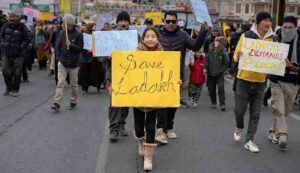
People in this normally peaceful region took to the streets with four main demands: full statehood for Ladakh, inclusion in the Sixth Schedule of the Constitution, two more Lok Sabha seats in Ladakh, and tribal status for the tribes of Ladakh.
Sixth Schedule: What is it
To preserve their culture, territory, and resources, some tribal areas in Northeast India have been granted autonomy under the Sixth Schedule, a key section of the Indian Constitution. Assam, Meghalaya, Tripura, and Mizoram are four hill states with a tribal majority that fall under this Schedule. It deals with the management of tribal lands to help these people preserve their identity and customs. This Schedule establishes Autonomous District Councils (ADCs), which have the power to make local laws related to issues such as taxation, education, land, and forests.
An Independent Council with 30 Members
Articles 244(2) and 275(1) of the Indian Constitution outline the content of the Sixth Schedule. The primary purpose of this Schedule is to protect the rights, culture, and identity of the local indigenous community. Additionally, it allows for local control and self-regulation in these areas. According to the rules, each autonomous district has a council consisting of not more than 30 members. Of these, 26 are elected by popular vote, and four are nominated by the Governor or Lieutenant Governor.
What are the powers of the Autonomous Council
These councils have the power to legislate and control matters such as land, forests, canals, water, migration, village administration, marriage, and social customs. They can also impose certain additional taxes and land revenue. Additionally, these bodies also have some judicial powers. These independent bodies have the authority to hear and decide certain civil and criminal matters under the provisions of the Sixth Schedule. However, these independent councils do not go beyond the powers granted to them by their respective states.
What concerns the people of Ladakh, and what changes will occur if implemented
The citizens of Ladakh have long demanded inclusion of the region in the Sixth Schedule of the Constitution. The protection of the identity, land, and culture of the local population—especially indigenous communities—is linked to this desire. Over 97% of the population is classified as Scheduled Tribes (STs), making Ladakh a tribal-dominated region. Its culture, largely Muslim and Buddhist, has long been demanded to be preserved. If Ladakh is included in the Sixth Schedule, the historical heritage of these tribes, including their traditions and social practices, will be protected. According to the Sixth Schedule, this will grant the region autonomy and constitutional rights.
Fear of External Interference
Now that Ladakh is a Union Territory, local people fear that outsiders will purchase their land and usurp its resources. With the implementation of the Sixth Schedule, they will gain control over their resources and territory, protecting them from foreign exploitation. Ladakh residents also want local youth to be given preference in government positions. To protect the community’s interests, autonomous councils will have the right to make laws related to employment and education under the Sixth Schedule.
It is noteworthy that on August 5, 2019, when the central government revoked Article 370, Jammu and Kashmir was divided into two Union Territories. Leh, Ladakh, and Kargil were combined to form a state, while Jammu and Kashmir was established as a Union Territory. Now there is a demand to include Ladakh in the Sixth Schedule and give it full sovereignty.