News – Trump Signals Military Readiness Ahead of Crucial Iran Talks
News – Hours before key diplomatic discussions in Islamabad, US President Donald Trump indicated that American naval forces are preparing for potential military action against Iran if ongoing negotiations fail to yield results. His remarks underscored the high stakes surrounding the talks, which are being closely watched by global leaders.
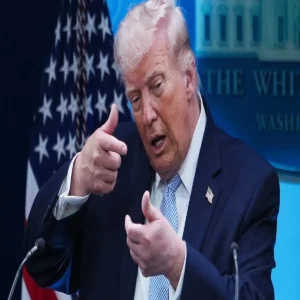
US Signals Strong Military Posture
In a recent interview, Trump revealed that US warships are being equipped with advanced weaponry, suggesting a readiness to act if diplomacy breaks down. He emphasized that the United States has significantly upgraded its military capabilities compared to previous operations. According to him, these preparations are not symbolic but intended to ensure decisive action if required.
Trump also made it clear that the use of force remains a viable option. He stated that if negotiations do not lead to an agreement, the United States would not hesitate to deploy its military resources effectively.
Sharp Criticism of Iran
In a separate social media statement, Trump adopted a more critical tone toward Iran, claiming that the country lacks leverage in the current situation. He accused Tehran of attempting to pressure the international community through its influence over key maritime routes. He further suggested that Iran’s current position leaves it with limited options beyond engaging in negotiations.
These remarks reflect ongoing tensions between the two nations, particularly concerning Iran’s role in regional security and global trade routes.
Vice President Expresses Cautious Optimism
US Vice President JD Vance, who traveled to Pakistan ahead of the talks, expressed measured optimism about the upcoming discussions. Speaking before his departure, Vance said he expects constructive engagement but warned that the US negotiating team would not tolerate attempts to manipulate the process.
His comments indicate a dual approach—maintaining openness to dialogue while remaining firm on key demands.
Iran Sets Conditions for Talks
Meanwhile, Iran has outlined its own expectations before formal negotiations begin. Parliamentary Speaker Mohammad Bagher Ghalibaf stated that certain previously agreed measures must be implemented first. These include a ceasefire in Lebanon and the release of Iranian assets that have been frozen abroad.
Iran has indicated that without progress on these issues, the scheduled talks may not proceed. This adds another layer of complexity to an already delicate diplomatic situation.
Regional Tensions Add Pressure
The broader regional context continues to influence the negotiations. Ongoing hostilities between Israel and Hezbollah have heightened instability, while Iran’s control over the Strait of Hormuz remains a critical concern for global trade.
The strategic waterway, through which a significant portion of the world’s oil supply passes, has seen a sharp decline in traffic. Before the escalation, more than 100 vessels crossed the strait daily. Recent figures show a drastic reduction, with only a small number of ships making the journey.
Concerns Over Oil Transit
Trump has also voiced dissatisfaction with the current situation in the Strait of Hormuz. He criticized Iran for restricting the flow of oil shipments, calling it inconsistent with previous understandings. According to him, the limited number of vessels passing through the route is affecting global supply chains and raising concerns among international stakeholders.
Security Tightened in Islamabad
As delegations prepare to arrive in Islamabad, security measures across the city have been significantly increased. Key routes, especially those connecting the airport to central areas, have been secured with barricades and restricted access. Authorities aim to ensure the safety of all participants amid heightened geopolitical tensions.
The upcoming discussions are seen as a critical moment in US-Iran relations. With both diplomatic and military signals being sent simultaneously, the outcome of these talks could shape the next phase of regional and global stability.