Former official residence of former Bangladesh Prime Minister Sheikh Hasina now converted into a museum
New Delhi: Gana Bhavan, the former official mansion of Bangladesh’s deposed prime minister Sheikh Hasina, is being transformed into a museum after being a tightly guarded prime minister’s residence. The July Revolution Memorial Museum is the most probable name for it.
Sheikh Hasina’s father, Bangabandhu Sheikh Mujibur Rahman, the country’s first leader, constructed the VIP compound, which has the amenities a leader needs to carry out official tasks. Sheikha Hasina made it her official house throughout her 15 years in office.
During British and Pakistani administration, the location was known as the Estate Rajbari, and it served as the Maharajas of Dighapatia’s palace. The palace served as the head of government of Bangladesh’s official home by the government.
‘Ganabhaban’ (People’s House), the family home of Sheikh Hasina, was to be transformed into a museum symbolizing her “misrule” by the interim administration headed by Chief Adviser Muhammad Yunus. The July Revolution Memorial Museum is almost finished, and on August 5, the anniversary of the overthrow of the Sheikh Hasina administration, it will be opened.
The location is in Dhaka’s Sher-e-Bangla Nagar, a short distance from the national parliament building. The present building was finished in 1984. More than a year after her election, on March 6, 2010, Sheikh Hasina moved into the Ganabhaban, where she lived till August 5 of last year.
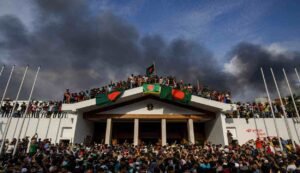
Shortly after Sheikh Hasina left the location and departed the country on August 5, a violent crowd that had come to Gana Bhavan’s gates with the purpose of assassinating her plundered the building. Almost everything in the house was stolen, including sarees, ornaments, clocks, couches, high-end purses, televisions, fish, and even underwear for ladies. Social media was overrun with pictures of the looting, which caused memes to go viral. Many of the plundered valuables were reportedly returned, according to later officials.
In a fit of rage against Hasina, the violent and rowdy crowd had broken into the building, accusing her of leading a fascist state and ordering murders.
Artifacts from the protestors slain in last year’s unrest will be on display at the museum, along with graffiti left by demonstrators on the wall. The Ministry of Cultural Affairs in Bangladesh has suggested creating around 200 jobs to run and oversee the museum. Once the museum has been given final clearance by the authorities in charge of its establishment, it will formally open to the public.