Global : A Controversial Claim and Its Implications
Global : Recent statements by United States President Donald Trump have ignited widespread discussion in international political circles, particularly concerning Venezuela and Washington’s evolving role in the region. Through a post on his social media platform, Truth Social, Trump described himself as the “Acting President of Venezuela,” a declaration that immediately drew attention from analysts, diplomats, and the global media. The claim, while symbolic in nature, has raised serious questions about sovereignty, international law, energy politics, and future relations between North and South America.
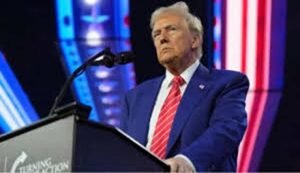
Background of the Social Media Declaration
The controversy began when Trump shared a post featuring his official presidential portrait alongside a designation that identified him as the Acting President of Venezuela, with a reference to January 2026. The post also reiterated his status as the 45th and 47th President of the United States, noting his assumption of office in January 2025. Although the message appeared on a social media platform rather than through formal diplomatic channels, its implications were significant enough to trigger global debate.
Observers noted that such a declaration, even if rhetorical, reflects a broader narrative of assertive foreign policy and unconventional communication strategies. Social media has increasingly become a tool for shaping political discourse, and this instance demonstrated how a single post can influence international conversations.
Military Action and Leadership Changes in Venezuela
The statement followed a major military operation carried out by the United States in Venezuela. According to official accounts, the operation was described as large-scale and resulted in the capture of long-time Venezuelan leader Nicolas Maduro and his wife, Cilia Flores. Both were reportedly transferred to New York, where they now face serious legal charges related to narco-terrorism conspiracy.
This development marked a dramatic turning point in Venezuela’s prolonged political crisis. For years, the country has faced economic instability, international sanctions, and internal power struggles. The removal of its central leadership figure altered the political landscape almost overnight, creating uncertainty about governance and future direction.
Washington’s Vision for a Transitional Administration
Following the operation, Trump stated that the United States would temporarily oversee Venezuela’s administration. He argued that a carefully managed transition was necessary to prevent chaos and protect the long-term interests of the Venezuelan population. According to his remarks, allowing a leadership vacuum could worsen economic conditions and undermine regional stability.
This approach reflects a broader strategic doctrine focused on controlled transitions rather than abrupt disengagement. Supporters argue that such oversight could help stabilize institutions, while critics warn it risks setting a precedent for external intervention in sovereign nations.
Appointment of an Interim Leadership
In the aftermath of Maduro’s removal, Venezuela’s Vice President and Oil Minister, Delcy Rodriguez, was sworn in as Interim President. Her appointment was presented as a step toward maintaining continuity in governance while longer-term political solutions are explored.
However, the legitimacy of interim arrangements has been widely debated. Different factions within Venezuela and the international community hold varying views on who should rightfully lead the country during this transitional phase. These disagreements highlight the complexity of rebuilding political consensus after years of division.
Energy Strategy and Oil Agreements
Energy policy quickly became a central element of the unfolding situation. Trump claimed that the interim authorities in Venezuela would transfer between 30 and 50 million barrels of high-quality oil to the United States. According to his statements, the oil would be sold at prevailing market rates, with revenues managed by the US administration in a way intended to benefit both nations.
The plan reportedly involved transporting the oil via storage vessels to American ports, with immediate implementation overseen by the Energy Secretary. This proposal underscored the strategic importance of Venezuela’s vast energy resources and their role in global markets. Analysts note that energy security, sanctions management, and economic leverage are deeply interconnected in this context.
Regional Signals and Policy Shifts
The announcement also carried broader regional implications. Trump warned that oil supplies and financial support previously extended from Venezuela to Cuba would be halted. This signal suggested a recalibration of policy toward allied governments in the region and indicated a tougher stance on longstanding geopolitical relationships.
Such moves could reshape alliances across Latin America and the Caribbean, influencing trade flows, diplomatic alignments, and regional cooperation frameworks.
Disputed Recognition and Public Records
Despite the bold social media declaration, Trump is not officially recognized as Venezuela’s Acting President in widely used public records or reference platforms. What is formally documented instead are the military intervention, the capture of former leadership, and the contested interim administration currently operating in Caracas.
This discrepancy highlights the difference between political messaging and formal recognition. While statements can influence perception, legitimacy in international affairs is typically grounded in legal frameworks, multilateral agreements, and institutional acknowledgment.