Energy – Iran Keeps Strait of Hormuz Accessible for Select Nations
Energy – Iran has indicated that it will allow ships from certain countries, including India, to pass through the strategically vital Strait of Hormuz, even as tensions continue to escalate in the Middle East following recent military confrontations.
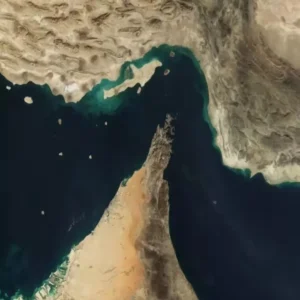
Selective Access Amid Ongoing Conflict
Speaking to state television, Iran’s Foreign Minister Abbas Araghchi clarified that reports suggesting a complete shutdown of the Strait were inaccurate. He stated that while the region remains volatile, Tehran is permitting controlled passage for nations it considers friendly or cooperative.
According to Araghchi, several countries have directly communicated with Iranian authorities to secure safe transit for their vessels. He confirmed that ships linked to countries such as India, China, Russia, Pakistan, and Iraq have already been granted passage in recent days. He also suggested that this arrangement could continue beyond the current conflict period.
Restrictions on Adversarial Nations
At the same time, Iran has made it clear that not all vessels will receive the same treatment. Ships associated with countries viewed as adversaries—particularly those involved in the ongoing military actions—are being denied access to the narrow waterway.
Araghchi emphasized that the region is effectively a war zone, and under such circumstances, Iran sees no obligation to facilitate transit for hostile nations or their allies. This position reflects Tehran’s broader strategy of leveraging the Strait as a geopolitical tool during the crisis.
Incident Highlights Enforcement Measures
Earlier this week, Iran demonstrated its strict enforcement of these controls by preventing a container vessel bound for Pakistan from entering the Strait. The ship, named SELEN, had departed from Sharjah in the United Arab Emirates and was headed toward Karachi. However, lacking the required authorization, it was forced to turn back near the entrance of the waterway.
Iran’s Islamic Revolutionary Guard Corps confirmed the incident, underscoring the country’s tight grip over maritime movement in the region.
Global Energy Flow Severely Disrupted
The Strait of Hormuz plays a crucial role in global energy supply, serving as a transit route for roughly 20 percent of the world’s oil and a significant share of liquefied natural gas. Since the outbreak of hostilities, shipping activity through the Strait has declined dramatically.
Recent data indicates a sharp drop in vessel traffic. While the route typically handles around 120 transits daily, the number has fallen significantly over recent weeks. Between early March and the 25th of the month, only 155 crossings were recorded, representing a steep decline of approximately 95 percent.
Of these movements, the majority involved oil and gas carriers, with most ships traveling eastward out of the Strait. On a recent day, only two vessels were observed making the westbound journey, highlighting the extent of the disruption.
Economic Impact Felt Worldwide
The reduced flow of energy supplies has begun to affect economies across the globe. Rising fuel prices, supply chain interruptions, and increased transportation costs are placing pressure on industries ranging from aviation to retail.
Businesses are facing a combination of higher operational expenses and weakening consumer demand. Some governments are already considering intervention measures similar to those implemented during the COVID-19 pandemic to stabilize their economies.
Conflict Trigger and Regional Fallout
The current crisis stems from a series of military strikes initiated by the United States and Israel targeting Iran. In response, Tehran launched retaliatory actions across the region and imposed tighter controls over the Strait of Hormuz.
This escalation has not only heightened geopolitical tensions but also disrupted one of the world’s most critical maritime corridors, creating uncertainty in global energy markets.
Despite the ongoing conflict, Iran’s decision to allow limited access to certain nations suggests a calibrated approach—balancing strategic pressure with selective cooperation.