DefenceTechnology – Russia Renews Proposal for India on Su-57 Fighter Project
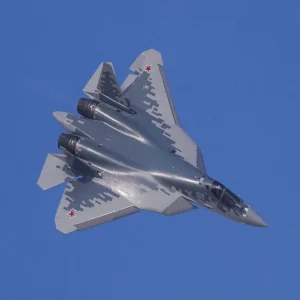
DefenceTechnology – Russia has once again expressed interest in partnering with India on the production of its advanced Su-57 stealth fighter aircraft, while also offering access to key defence technologies for future military platforms. The proposal was made by Russian President Vladimir Putin during a discussion with international media representatives, highlighting Moscow’s willingness to deepen defence collaboration with New Delhi.
Russia Revives Earlier Joint Fighter Proposal
Speaking about defence cooperation, Putin recalled that Russia had previously invited India to participate in the development of a fifth-generation combat aircraft under a joint programme. According to him, India chose not to continue with the initiative at that time, preferring to evaluate the aircraft after its development progressed further.
Putin noted that although Russia completed the project independently, the country remains open to working alongside India in the future. He emphasized that the aircraft could still become a platform for bilateral cooperation if New Delhi decides to engage in the programme.
India’s Need for Next-Generation Combat Aircraft
The renewed offer comes as India evaluates options to strengthen its air combat capabilities. Several neighbouring countries are modernising their air forces and investing in advanced fighter aircraft, increasing the strategic importance of next-generation platforms.
At the same time, India is pursuing its own indigenous fifth-generation fighter programme, the Advanced Medium Combat Aircraft (AMCA). However, the aircraft is still under development and is expected to enter operational service only during the next decade, creating a potential capability gap in the interim period.
Reasons Behind India’s Earlier Exit
India withdrew from the joint fighter development programme in 2018 after years of collaboration and substantial investment in preliminary design work. Reports at the time pointed to disagreements over project costs, technology transfer arrangements and concerns regarding certain performance parameters of the aircraft.
The Indian Air Force was particularly focused on issues related to stealth effectiveness, delays in engine development and the extent of access to critical technologies. These factors ultimately contributed to New Delhi’s decision to discontinue participation in the programme.
Changing Dynamics in Defence Cooperation
Since India’s withdrawal, the defence environment has evolved considerably. Industry observers have noted that Russia’s defence export policies have become more aligned with India’s domestic manufacturing goals, including support for local production and technology sharing initiatives.
Analysts believe these changes could make future discussions more attractive from an industrial and strategic standpoint. However, any decision would still require careful evaluation of operational requirements and long-term defence objectives.
Capabilities of the Su-57 Fighter Aircraft
Developed by Russia’s Sukhoi Design Bureau, the Su-57 is designed as a multi-role fifth-generation fighter capable of engaging aerial, ground and maritime targets. The aircraft combines stealth features with advanced avionics, electronic warfare systems and long-range strike capabilities.
The fighter is also designed to operate in challenging combat environments, including adverse weather conditions and situations involving electronic interference. Its low-observable design aims to reduce detection by modern air defence networks while maintaining high manoeuvrability.
Recent upgrades include the integration of a new-generation engine intended to improve thrust and overall flight performance. Russia has also introduced a twin-seat version featuring a second cockpit position that can serve as a command station for controlling unmanned systems and coordinating complex battlefield operations.
Strategic Considerations Continue to Shape India’s Approach
Despite Russia’s renewed outreach, India remains cautious as it evaluates future defence acquisitions. Decision-makers are increasingly considering factors such as technology ownership, supply-chain reliability, geopolitical risks and long-term maintenance support.
While Russia continues to be an important defence partner, India has simultaneously expanded military cooperation with several other countries, including France and the United States. This broader approach reflects New Delhi’s strategy of diversifying defence partnerships while strengthening its own domestic defence manufacturing capabilities.