MiddleEastCrisis – India Reviews Safety of Citizens Abroad
MiddleEastCrisis – The Indian government has moved swiftly to assess the safety of millions of its citizens living in the Middle East as tensions in the region surge following a series of military exchanges.
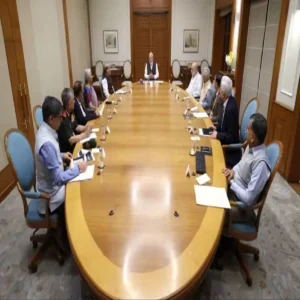
Prime Minister Narendra Modi convened an urgent meeting of the Cabinet Committee on Security on Sunday evening, placing the welfare of nearly 9 million Indians residing and working across Gulf nations at the center of discussions. The high-level meeting lasted about three hours and came amid growing fears that the conflict could expand further.
Escalating Military Situation Raises Alarm
The emergency review was held after coordinated airstrikes by the United States and Israel targeted sites in Iran, prompting retaliatory attacks from Tehran on American allies in the Gulf. Reports of strikes in cities including Dubai and targets in Qatar have heightened concerns that the confrontation may spread beyond its current flashpoints.
Members of the Cabinet Committee on Security, the country’s apex body on strategic affairs, received detailed briefings on the unfolding military developments. Officials examined the potential implications of a prolonged conflict, particularly for Indian nationals scattered across the region.
Impact on Indian Nationals and Travel Disruptions
The vulnerability of the Indian diaspora featured prominently during the discussions. Beyond immediate safety risks, authorities reviewed the mounting logistical challenges triggered by the conflict.
Airspace restrictions across 11 countries have led to the cancellation of around 350 international flights operated by Indian carriers in a single day. The sudden disruption has stranded passengers and complicated travel plans for thousands, including students preparing for key examinations in Gulf countries.
There was also concern over the Strait of Hormuz, a crucial maritime corridor through which a substantial portion of India’s energy imports pass. Any prolonged disruption in this route could affect fuel supplies and trade flows, potentially impacting domestic markets.
Diplomatic Outreach to Regional Leaders
Amid the rising tensions, Mr. Modi initiated direct conversations with leaders in the region. In a phone call with Israeli Prime Minister Benjamin Netanyahu, he conveyed India’s apprehensions regarding the latest developments and underscored that safeguarding citizens remains the government’s foremost responsibility. He reiterated India’s call for an early end to hostilities and emphasized the importance of dialogue.
Earlier, the Prime Minister spoke with UAE President Sheikh Mohamed bin Zayed Al Nahyan, expressing condolences over reported casualties and condemning attacks on the United Arab Emirates. He thanked the UAE leadership for ensuring the safety and well-being of the large Indian community based there. The United Arab Emirates hosts one of the largest overseas Indian populations, many of whom work in key sectors such as construction, healthcare, and services.
Preparedness Measures and Government Response
Following the security review, the Cabinet Committee directed relevant ministries and agencies to take all necessary steps to support Indian citizens who may be affected by the instability. Contingency evacuation plans are reportedly being prepared, though officials maintain that such measures would be implemented only if circumstances demand.
The Ministry of External Affairs has activated round-the-clock helplines at Indian missions in Tehran, Tel Aviv, Abu Dhabi, and Dubai. These channels are intended to provide real-time assistance, share travel advisories, and coordinate support for those facing difficulties.
Officials indicated that New Delhi’s approach seeks to balance two priorities: ensuring the protection of Indian nationals overseas and advocating for restraint to prevent further escalation. Policymakers are closely monitoring developments, mindful that a wider conflict could trigger economic volatility far beyond the region.
As the situation remains fluid, India’s diplomatic and security establishments continue to track events on an hourly basis. The government has reiterated its position that dialogue and de-escalation offer the only sustainable path forward, while keeping preparations in place to respond swiftly should conditions deteriorate.