Trump : Warns of Severe Tariffs as Canada Deepens Trade Ties with China
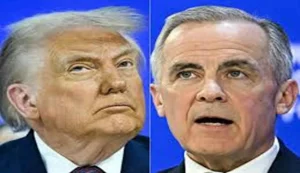
Trump : The relationship between the United States and Canada has entered a tense phase after US President Donald Trump issued a sharp warning over Canada’s growing trade engagement with China. Trump stated that if Canada proceeds with its proposed trade agreement with Beijing, the United States could impose sweeping tariffs on all Canadian goods entering the American market. The remarks have added new uncertainty to North American trade relations at a time when global economic alliances are already under strain.
Trump’s Tariff Threat and Strong Language
President Trump used his social media platform to deliver a direct message to Ottawa, making it clear that Washington would not tolerate what he described as Canada becoming an entry point for Chinese goods into the US market. He warned that such a move would result in a 100 percent tariff on all Canadian imports into the United States. According to Trump, the potential trade deal between Canada and China could undermine American economic interests and allow China to bypass existing trade barriers.
Trump also used unusually harsh language to criticize the idea of closer Canada-China ties, claiming that China would dominate Canada economically and damage its domestic industries. His comments reflect long-standing concerns within his administration about China’s global trade practices and their impact on Western economies.
Canada and China’s Strategic Trade Shift
Canada, on the other hand, has been actively seeking to diversify its trade partnerships. In a recent announcement, Canadian Prime Minister Mark Carney described a preliminary agreement with China as a landmark step under a new strategic partnership. The deal aims to reduce trade barriers and lower tariffs on key products, signaling a reset in bilateral relations after years of diplomatic strain.
One of the most significant elements of the agreement involves agricultural trade. China has agreed to sharply reduce tariffs on Canadian canola products, restoring access to a market that was once one of Canada’s most valuable export destinations. These reductions are expected to come into effect by early March, providing relief to Canadian farmers who have struggled under previous restrictions.
Electric Vehicles and Travel Benefits
Beyond agriculture, the agreement includes provisions for industrial and consumer sectors. China has agreed to allow Canadian citizens to enter the country without a visa, a move expected to boost tourism and business travel. In return, Canada will import a fixed number of Chinese electric vehicles under preferential tariff rates, supporting its transition toward cleaner transportation and broader consumer choice.
These measures indicate that both countries are attempting to rebuild trust and create mutual economic benefits after years of tension.
Background of Diplomatic Strains
Relations between Canada and China deteriorated sharply following the arrest of a senior executive linked to a major Chinese technology company on a US warrant. China responded by detaining two Canadian citizens on espionage charges, leading to a prolonged diplomatic standoff. Both sides imposed tariffs on various exports, disrupting trade flows and damaging business confidence.
In recent months, China has signaled a willingness to normalize relations, stating that it wants to bring bilateral ties back on track. Prime Minister Carney has also shown interest in repairing the relationship as part of a broader effort to reduce Canada’s dependence on a single economic partner.
Growing Canada-US Political Tensions
The trade dispute has unfolded alongside rising political tensions between Ottawa and Washington. These tensions became more visible after Carney delivered a speech at the World Economic Forum, warning about fractures in the US-led global order. While he did not mention Trump by name, the message was widely interpreted as criticism of American foreign policy under the current administration.
Trump responded with his own remarks and later withdrew an invitation for Carney to participate in a proposed international peace initiative. This move further underscored the strained personal and political relationship between the two leaders.
Canada’s Assertion of Economic Independence
In a national address, Carney emphasized Canada’s sovereignty and resilience, stating that the country’s success is rooted in its own identity rather than reliance on the United States. At the same time, he acknowledged the long-standing partnership between the two nations, highlighting the complexity of balancing national pride with economic realities.
As Canada explores new trade avenues and the United States signals potential retaliation, the situation remains fluid. The outcome of these developments could reshape trade dynamics in North America and influence how middle powers navigate relationships between global economic giants.