Trump was afraid of Indian Brahmos missile: Big revelation of Operation Sindoor
Washington: The American newspaper Wall Street Journal (WSJ) has claimed in a report that the US President was scared of India’s Operation Sindoor. The report said that US President Donald Trump was afraid of the Indian BrahMos missile, which India used to attack Pakistan’s airbases. The WSJ report claims that during Operation Sindoor, the US received intelligence that India had fired BrahMos cruise missiles to attack targets within Pakistan. The US feared that if the conflict with Pakistan escalated, India could equip BrahMos with nuclear weapons.
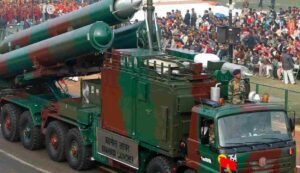
The report, citing some current and some former officials of the Donald Trump administration, claims that US officials believed that the BrahMos missile, jointly developed by India and Russia, was capable of carrying a nuclear warhead. The report cited US officials as saying that “Donald Trump feared that if the situation spiraled out of control, India could decide to arm one of the missiles with a nuclear warhead, or Pakistan could decide to fire a nuclear weapon itself, which prompted Trump to encourage Vance and Secretary of State Marco Rubio to call their counterparts.”
America was afraid of India’s attacks in Operation Sindoor
Let us tell you that during Operation Sindoor, India fired at least 15 missiles at the airbases of the Pakistani Air Force after the attacks by the Pakistani Army. Pakistan was not able to intercept even a single Brahmos, and Brahmos fell on 11 of its airbases. After the Brahmos attacks, some of Pakistan’s airbases have not been operational even after three months of the war, and Pakistan repeatedly issues NOTAMs for their repair. However, India has been constantly saying that the Brahmos supersonic cruise missile is a completely conventional weapon system. It is operated by the Indian Army, Artillery Regiment, Indian Air Force and Indian Navy, and it does not come under the purview of the Strategic Force Command (SFC), which is responsible for managing the country’s nuclear arsenal.
India’s Nuclear Command, which maintains nuclear weapons, does not include the stock of Brahmos missiles. The missile is designed to carry a conventional warhead weighing 200 to 300 kilograms and is widely considered a high-precision, non-nuclear strategic weapon. According to the WSJ report, Donald Trump feared that the conflict between India and Pakistan could escalate into a nuclear conflict, and the WSJ says that the White House believed that the situation had become so volatile that direct intervention was required. In the report, a White House official has said that the situation had become such that Trump took advantage of his personal relationship in New Delhi and Islamabad to avert a potential nuclear confrontation. However, the official refused to comment on whether India’s use of BrahMos specifically gave rise to these concerns.
Indian Embassy’s response to WSJ report
In response to questions about the deployment of the BrahMos missile during the operation, officials at the Indian Embassy in Washington told WSJ that India follows a “no first use” nuclear doctrine and the use of BrahMos should not have raised concerns of escalating nuclear attacks. India has clarified that BrahMos is a missile that attacks only with conventional weapons, not nuclear. However, India has repeatedly denied that Donald Trump made any attempt to mediate. The Indian government has also said in Parliament that India’s DGMO received a call from Pakistan’s DGMO for a ceasefire in the war, and only after that did India agree to a ceasefire.
Let us tell you that the BrahMos missile, jointly developed by India and Russia, is the world’s only supersonic cruise missile that flies at a speed of about Mach 2.8. It is named after India’s Brahmaputra and Russia’s Moskva rivers. This missile can be fired from land, sea and air and is capable of carrying 200 to 300 kg of conventional explosives. Equipped with ‘fire and forget’ technology, this missile is considered to be highly accurate and expert in dodging enemy radars.