Trump – Social Media Video Targeting Obamas Sparks Backlash
Trump – President Donald Trump is facing widespread criticism after sharing a video on his Truth Social platform that included altered images of former President Barack Obama and former First Lady Michelle Obama depicted as apes. The post, which circulated widely online, has intensified political tensions and drawn condemnation from several public figures.
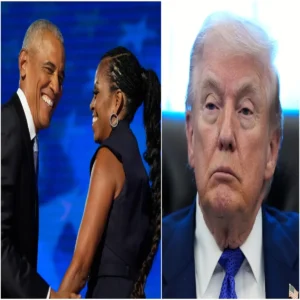
The roughly one-minute clip was uploaded on Thursday and revisited claims about the 2020 presidential election that have repeatedly been dismissed by courts and election officials. The video repeated allegations that Dominion Voting Systems manipulated ballot counts during the election, assertions that have been rejected in multiple legal proceedings.
https://x.com/Osint613/status/2019675093677555995?s=20
Altered Images and Online Reaction
Toward the end of the video, the Obamas briefly appear with their faces digitally superimposed onto ape bodies. The imagery is shown for only a moment, accompanied by the song “The Lion Sleeps Tonight.” Critics quickly described the content as offensive and inappropriate, particularly given the racial undertones associated with such depictions.
The video rapidly spread beyond Truth Social, drawing sharp responses from political leaders and commentators. Many described the post as unbecoming of a sitting president and expressed concern about the tone of public discourse in American politics.
Newsom and Other Democrats Condemn Post
California Governor Gavin Newsom, a frequent critic of Trump and a possible Democratic contender in the 2028 presidential race, called the video “disgusting” in a statement posted by his office on X, formerly Twitter. He urged Republican leaders to speak out against the post.
Ben Rhodes, a former national security adviser and longtime aide to Barack Obama, also weighed in. Writing on X, Rhodes argued that history would judge Trump harshly while remembering the Obamas more favorably. He further accused the president’s supporters of promoting racist narratives.
Neither Barack Obama nor Michelle Obama issued a public response to the video as of Friday.
Pattern of AI-Generated Mockery
This is not the first time Trump has shared digitally manipulated or AI-generated content targeting political opponents. In previous instances, he posted an artificial intelligence-created clip portraying Barack Obama being arrested inside the Oval Office and later shown behind bars in a prison uniform.
Another AI-generated video shared by Trump depicted House Minority Leader Hakeem Jeffries wearing exaggerated accessories in a satirical portrayal. These posts have regularly drawn criticism from Democrats, who argue that such content undermines political norms.
The use of AI-generated media in political messaging has become an increasingly debated issue in the United States. Experts warn that manipulated visuals can deepen misinformation concerns, particularly during election cycles.
White House Dismisses Criticism
The White House pushed back against the backlash on Friday, characterizing the outrage as misplaced. Press Secretary Karoline Leavitt said the video was based on an internet meme that portrayed Trump as the “King of the Jungle” while depicting Democrats as characters from The Lion King.
In a statement to AFP, Leavitt urged news organizations to focus on issues she described as more relevant to American voters. The administration has maintained that the clip was intended as satire rather than a serious statement.
Broader Political Context
Barack Obama, the nation’s first Black president, campaigned in support of Vice President Kamala Harris during the 2024 presidential election, positioning himself as a prominent voice for Democrats during the race. His continued visibility in national politics has kept him a recurring subject of criticism from Trump.
The latest episode underscores the ongoing polarization in US politics, particularly as digital platforms and artificial intelligence tools reshape campaign communication. With the 2024 election cycle still fresh in public memory and attention already shifting toward future contests, the boundaries of political messaging remain a subject of national debate.
As reactions continue to unfold, the controversy highlights the challenges facing political leaders in balancing free expression, digital media innovation, and responsible public discourse.