Tariffs – Trump’s New 15% Duties Face Legal Scrutiny Again
Tariffs – President Donald Trump’s decision to impose temporary 15 percent tariffs under a different legal provision is drawing fresh questions from economists and legal experts, just days after the US Supreme Court blocked his earlier approach.
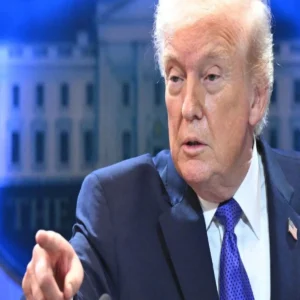
The administration began collecting the new duties at midnight Tuesday, shifting to Section 122 of the Trade Act of 1974 after the court rejected its use of the International Emergency Economic Powers Act (IEEPA) to justify the tariffs. The change in strategy, however, has not quieted the debate. Instead, it has opened a new front over whether the rarely discussed statute can support such sweeping trade measures.
Shift to a Rarely Used Trade Provision
Section 122 allows a president to impose tariffs of up to 15 percent for a maximum of 150 days if the country is facing what the law describes as “large and serious” balance-of-payments deficits or fundamental international payments problems.
In announcing the new order, Trump argued that the United States is confronting serious imbalances. The White House pointed to a $1.2 trillion annual goods trade deficit, a current account shortfall equal to roughly 4 percent of gross domestic product, and a recent reversal of the nation’s long-standing primary income surplus.
Administration officials maintain that these indicators justify temporary intervention to stabilize international economic conditions and protect US interests.
Economists Dispute Crisis Claims
A number of economists have rejected the argument that the country is experiencing a balance-of-payments emergency. Among them is Gita Gopinath, former First Deputy Managing Director of the International Monetary Fund, who said the United States does not meet the criteria typically associated with such crises.
Speaking to Reuters, Gopinath noted that balance-of-payments crises usually involve sharp increases in international borrowing costs, currency instability, and a loss of access to global financial markets. None of those conditions, she said, are currently evident in the US economy.
She also challenged the administration’s emphasis on the negative primary income balance, the first since 1960. According to Gopinath, the shift reflects a surge in foreign investment in US equities and higher-risk assets over the past decade. Those investments have delivered strong returns compared with foreign markets, altering income flows but not signaling systemic distress.
Other analysts share similar concerns. Joe Brusuelas, chief economist at RSM, told Axios that the economic conditions outlined in Section 122 do not align with present-day realities. He and others argue that a trade deficit, while politically contentious, is conceptually distinct from a balance-of-payments crisis.
Legal Questions Intensify
Legal experts have also pointed to complications arising from the administration’s earlier position. In defending the now-blocked IEEPA tariffs in court, Justice Department lawyers had previously stated that Section 122 did not appear applicable to concerns rooted in trade deficits, which they described as different from balance-of-payments deficits.
That earlier assessment could now complicate the government’s defense. Neal Katyal, who argued before the Supreme Court on behalf of plaintiffs challenging the IEEPA tariffs, told CNBC that the administration’s prior statements may strengthen potential lawsuits against the new duties.
Katyal suggested that if the president proceeds under a statute that government lawyers previously dismissed as inapplicable, the measure could face swift legal challenges, possibly without requiring immediate Supreme Court review.
Potential Challenges and Broader Strategy
It remains unclear which group might formally challenge the Section 122 tariffs. Sara Albrecht, chair of the Liberty Justice Center, a public-interest law firm that represented small businesses in the earlier case, said her organization is closely reviewing the administration’s latest move. For now, she indicated the group’s priority is ensuring refunds are issued to companies that paid duties under the invalidated IEEPA policy.
Even if lawsuits are filed quickly, court proceedings could extend beyond the 150-day window permitted under Section 122. That time limit may allow the administration to maintain the tariffs temporarily while exploring alternative trade authorities.
Observers note that more established legal pathways, including Sections 232 and 301 of US trade law, remain available for actions related to national security or unfair trade practices. Whether the administration ultimately pivots again may depend on how courts respond to this latest attempt.
As the legal debate unfolds, the dispute underscores the continuing tension between executive authority and judicial oversight in shaping US trade policy.