Tariffs – Trump Imposes New 10% Duty After Court Ruling
Tariffs – President Donald Trump on Friday ordered an additional 10 percent tariff on goods entering the United States, acting swiftly after the Supreme Court invalidated a series of broad trade measures that had formed the backbone of his economic strategy.
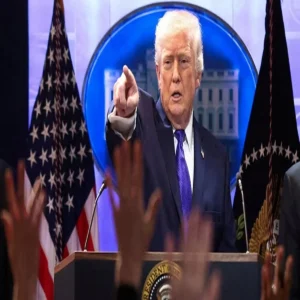
The directive was signed in the Oval Office and, according to Trump’s statement on social media, took effect almost immediately. Over the past year, the administration had introduced varying tariff rates targeting both allies and competitors, arguing the measures were necessary to correct trade imbalances and protect domestic industries.
Supreme Court Limits Executive Authority on Tariffs
In a 6–3 ruling, the conservative-leaning Supreme Court concluded that the 1977 International Emergency Economic Powers Act does not grant the president authority to impose sweeping tariffs on individual nations. The majority opinion stated that if Congress had intended to provide such expansive power, it would have done so explicitly in the statute.
Chief Justice John Roberts wrote that the law contains no mention of tariffs or duties, underscoring the court’s view that trade policy authority ultimately rests with Congress unless clearly delegated.
The decision marked a notable setback for Trump, who had nominated two of the justices who joined the majority opinion. Speaking to reporters, the president sharply criticized members of the court, accusing them — without offering evidence — of failing to act in the country’s interest.
Despite the ruling, Trump argued that alternative legal avenues remain available to advance his trade agenda. He maintained that the court’s decision does not weaken his overall position and suggested that new measures could generate comparable revenue.
Administration Signals Alternative Strategy
Treasury Secretary Scott Bessent, addressing the Economic Club of Dallas, said the administration’s revised approach would likely keep tariff revenue largely steady through 2026. While details were limited, officials indicated they would rely on different statutory authorities and ongoing trade investigations.
Importantly, the court’s ruling did not affect sector-specific duties previously placed on products such as steel and aluminum. Federal investigations into additional industries are still underway, potentially paving the way for further targeted tariffs.
Market and Business Reaction
Financial markets reacted calmly. Wall Street indexes edged higher following the decision, reflecting expectations that the ruling would bring greater clarity to trade policy.
Major business organizations welcomed the outcome. The National Retail Federation said the decision offers companies much-needed predictability after months of shifting trade rules that complicated supply chains and pricing strategies.
Uncertainty Over Potential Refunds
One unresolved issue is whether companies that paid tariffs under the invalidated measures will receive refunds. During oral arguments, government lawyers indicated that reimbursements would be provided if the duties were deemed unlawful. However, the Supreme Court’s decision did not directly address how refunds would be handled.
Trump acknowledged that the question could lead to prolonged legal disputes. Justice Brett Kavanaugh, the sole Trump appointee to side with the administration, noted separately that any refund process could become administratively complex.
Economic analysts estimate the financial stakes are substantial. The Penn Wharton Budget Model at the University of Pennsylvania projected that refunds could total as much as $175 billion if courts ultimately require repayment.
Political and International Responses
California Governor Gavin Newsom criticized the tariffs as unlawful and called for prompt reimbursement with interest. Meanwhile, Senator Elizabeth Warren cautioned that there may be no straightforward legal mechanism for consumers and many small businesses to recover funds already paid.
The Budget Lab at Yale University estimated that the effective average tariff rate facing consumers would fall to 9.1 percent after the ruling, down from 16.9 percent. Even so, researchers noted that the rate remains among the highest seen in decades.
International partners, including the European Union and the United Kingdom, said they were reviewing the implications of the decision. Canada described the ruling as validation of its longstanding objections to certain US trade measures, while business leaders there warned that further disruptions could follow if new mechanisms are introduced.
Trump indicated that bilateral trade agreements negotiated with countries such as India would remain intact despite the court’s decision, signaling that his administration intends to continue reshaping US trade relationships through other channels.