Uttar Pradesh: On the Banke Bihari temple case, the Supreme Court said, “Lord Krishna was the first mediator…”
Uttar Pradesh: In a case involving the intended rehabilitation of a corridor utilizing Rs 500 crore from temple finances and a disagreement between the Uttar Pradesh government ordinance and the Shri Banke Bihari Temple in Vrindavan, the Supreme Court on Monday summoned the spirit of Lord Krishna, the “first mediator.”
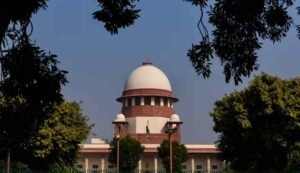
By saying, “Lord Krishna was the first mediator… please try to mediate the matter,” the court suggested a committee to resolve the dispute between the temple trust and the state government.
However, an irate top court questioned the “hurry” to issue that decision, stating that the Allahabad High Court must first determine if the UP government ordinance is lawful.
The court expressed concern about the “clandestine manner” in which the Uttar Pradesh government obtained a Supreme Court sanction for the use of temple finances and posed pointed questions to the administration.
Orally, a panel consisting of Justices Surya Kant and Joymalya Bagchi suggested overturning a May 15 ruling that permitted the state government to use temple monies.
“We propose this… part of the (earlier) judgement we will keep in abeyance… we will have a former High Court judge or senior retired district judge as management trustee…”
Until the legitimacy of the ordinance is established, this committee will manage the temple.
“We will give some space for the interim committee (of retired judges) to utilize the funds (to improve infrastructure and ensure a safer pilgrimage experience for devotees).”
According to the court, the temple trust could then contest the UP government ordinance and try to prevent it from meddling in the temple’s management and ceremonies.
The state’s additional solicitor general, KM Nataraj, has been given till 10.30 am tomorrow to speak with the Uttar Pradesh administration and respond to this request.
The previous trust management claimed throughout the hearing that the ordinance had forced out the family that had been operating the temple and turned it over to the state government. Additionally, the prior management contended that they were not given a hearing before the law was approved.
The court was informed that the Uttar Pradesh government had stepped in to resolve a private party dispute and obtained directions (using the Supreme Court decision from May 15) to use the money.
The court then inquired about the validity of the May 15 decree from the Uttar Pradesh administration.
“The Banke Bihari temple was not the subject of the case before this court. There may have been a public notice… was there a receiver appointed by the court? ‘No man’s land’ was not the situation. On behalf of the temple, someone had to be heard,” Justice Surya Kant reasoned.
The Supreme Court also questioned why the state did not compensate the private owners in order to purchase the property for the reconstruction of the corridor. “What legal restrictions stopped the state from carrying out development projects if that was its intention? A decision could have been made regarding the land issue.
The Supreme Court had questioned the Uttar Pradesh government in May as well for “hijacking” a lawsuit between two private companies that were fighting over temple administration.
The rule of law would collapse, according to a panel of Justices BV Nagarathna and Satish Chandra Sharma, if governments began interfering in private disputes between parties.
Was there any involvement from the State in the proceedings? What role did the State play in the conflict? There will be a complete collapse of the legal system if governments begin to become involved in private disputes between parties. It is not acceptable for a state to file an application and then hijack it in a private lawsuit.
This came after the UP government’s attorney told the Supreme Court that the state has established a trust to run the temple and supervise construction of the planned road.
One of the most popular pilgrimage destinations in northern India is the Banke Bihari temple, which was constructed in 1862. The Shebaits, a hereditary priesthood, are in charge of daily ceremonies and temple management.
Following a stampede-like occurrence that claimed two lives at the 2022 Janmashtami festivities, there was a need for rebuilding.
The Allahabad High Court ordered the Uttar Pradesh government to create a corridor plan in September 2023 in order to control crowd pressure and guarantee public safety.