India engaged in making fighter aircraft with indigenous technology, will be equipped with ‘Brahmastra’
India: The fighter aircraft TEJAS MK-2, which is being constructed using domestic technology, is set to include the cutting-edge Meteor missile (Meteor Beyond-Visual-Range Air-to-Air Missile, or BVRAAM). Following completion, the Indian Air Force will have a far greater capacity for air-to-air attacks. Tejas MK-2 will get even greater power as a result. The Tejas MK-2 is regarded as a fighter aircraft of the 4.5 generation. It is a contender of the Rafale because of its various characteristics. The Tejas MK-2 may also be equipped with ultra-modern armaments in addition to the contemporary edge radar system. The DRDO-developed Tejas MK-2 will also include the BrahMos supersonic cruise missile, increasing the lethality of its striking capacity.
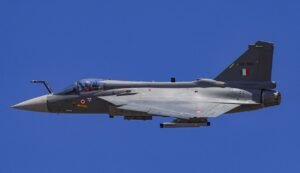
Now let’s discuss the Meteor missile. Because of its cutting-edge technology, including its throttleable ramjet propulsion system, active radar seeker, and two-way data link, this missile is regarded as one of the most lethal BVR weapons in the world. In contrast to missiles with solid rocket motors, the Meteor’s ramjet engine provides thrust continuously while in flight and can be adjusted to enhance or reduce it as needed. This implies that this missile may strike adversaries while continuing to travel at a speed greater than Mach 4 (five thousand kilometers per hour) until the very end. The enemy’s chances of escaping are decreased since it saves fuel by decreasing thrust in mid-course and executes a quick maneuver by boosting thrust as soon as it approaches the target.
No opportunity for the adversary to flee
The Meteor missile’s enormous no escape zone (NEZ) is its greatest strength. The adversary aircraft cannot flee from the missile once it has arrived within this range. Compared to conventional missiles, its range is several times greater. Although its stated striking range is above 100 miles, in practice it may be as much as 200 km. As a result, TEJAS MK-2 may launch the first attack. Even before the opponent is within range, it may be targeted and eliminated.
Even while in the air, a two-way data connection may modify the target
By using real-time data from the Uttam AESA radar on the TEJAS MK-2 or other network sensors, Meteor’s two-way data link enables mid-course upgrades and retargeting. Even in the face of intense electronic jamming, this function retains accuracy and lethality. This allows the TEJAS MK-2 to launch an assault by using both its radar and external platforms to determine the target’s current state. In other words, a fighting capacity that is entirely network-centric.
The Uttam AESA Radar is a real meteor companion
Gallium nitride (GaN) technology will be the foundation of the indigenous Uttam AESA radar deployed in the TEJAS MK-2, allowing for the identification of fighter-sized objects at a distance of 200 km or more. Compared to the earlier radar, it will be more power-efficient and resistant to electronic jamming. The TEJAS MK-2 has an advantage in monitoring, locking, and eliminating the opponent at a great distance because of the radar’s sensor fusion capabilities and its cooperation with Meteor.
Comparable to the best fighter jets
Modern fighter aircraft such as the F-35, Eurofighter Typhoon, Gripen, and Rafale now use Meteor. However, India will also have comparable, if not superior, BVR capacity under circumstances thanks to its inclusion in TEJAS MK-2. With the inclusion of Meteor, the TEJAS MK-2 will be able to strike while avoiding danger in addition to striking the adversary from a great distance. This will boost the pilot’s chances of survival even in high-threat situations by giving him the courage to fire and kill first. The Indian Air Force will have a significant advantage in contemporary air combat thanks to the Meteor missile and Uttam AESA radar.