SupremeLeader – Iran Enters Uncertain Chapter After Khamenei’s Death
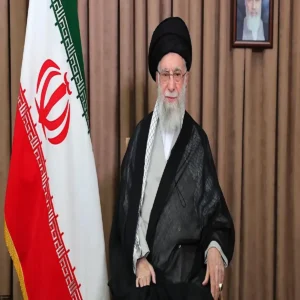
SupremeLeader – The killing of Iran’s long-serving Supreme Leader, Ayatollah Ali Khamenei, in coordinated US and Israeli airstrikes has thrust the Islamic Republic into one of the most consequential moments in its modern history. The 86-year-old cleric, who ruled for nearly four decades, died in strikes that reduced his heavily guarded compound in central Tehran to rubble. Several members of his family were also reported killed.
A Defining Moment for the Islamic Republic
Khamenei’s death comes amid heightened military confrontation in the Persian Gulf, following months of escalating exchanges between Iran, the United States and Israel. Satellite imagery circulating after the attack showed extensive destruction at the leader’s residential and administrative complex.
For many Iranians, the event marks the end of an era. A majority of the country’s population has known no other Supreme Leader. Yet while the leadership vacuum is significant, the core institutions of the Islamic Republic remain operational. Analysts say the armed forces and the Islamic Revolutionary Guard Corps continue to maintain firm control over national security structures.
Ellie Geranmayeh, a senior policy fellow at the European Council on Foreign Relations, noted that Iran’s military establishment appears united and prepared to sustain resistance. She said the leadership is likely to focus on maintaining internal cohesion as external pressures mount.
Public Reaction and Tightened Security
In some cities, videos on social media showed small groups celebrating the news. However, there has been no widespread mobilization against the state. Security has been visibly reinforced in Tehran and other urban centers, with increased patrols by police and volunteer paramilitary forces.
Despite calls from US President Donald Trump urging Iranians to seize the moment, there is little indication of coordinated action. Observers say many citizens are prioritizing personal safety amid the ongoing conflict rather than engaging in political confrontation.
Iran’s constitution prohibits political movements that reject the foundations of the Islamic Republic or the authority of a religious supreme leader. Reformist figures who have pushed for structural change have often faced detention. Human rights organizations estimate that thousands were killed during the suppression of protests earlier this year.
The Constitutional Path Forward
According to Iran’s constitutional framework, executive authority temporarily shifts to a council composed of the president, the head of the judiciary and a senior cleric from the Guardian Council. The Assembly of Experts is responsible for selecting the next Supreme Leader and is expected to convene in the coming days.
Mehran Kamrava, a government professor at Georgetown University in Qatar, said the transition is likely to follow established procedures in the short term. However, he emphasized that Khamenei’s absence could reshape how the Islamic Republic conducts itself domestically and abroad.
Speculation has centered on Mojtaba Khamenei, the late leader’s second-eldest son, though no official candidate has been announced. Some analysts suggest that the swift confirmation of Khamenei’s death may indicate that succession planning was already underway.
Growing Influence of the Revolutionary Guard
Attention has also turned to the expanding role of the Islamic Revolutionary Guard Corps. Originally formed to defend the revolution, the IRGC has accumulated significant political and economic power over the past two decades. Senior figures, including parliamentary speaker Mohammad-Bagher Ghalibaf and former commander Mohsen Rezaee, are now closely involved in shaping Iran’s response to the strikes.
Ali Larijani, secretary of the Supreme National Security Council and a long-time adviser to Khamenei, has publicly outlined the interim governance process and is viewed as a key figure during the transition.
Regional and Nuclear Implications
International reactions have been mixed. Russian President Vladimir Putin described Khamenei as an influential statesman, while China condemned the assassination. Western leaders have largely focused on the implications for regional stability.
The leadership change also raises questions about Iran’s nuclear doctrine. Before his death, Khamenei had maintained a religious decree opposing the development of nuclear weapons, and Iran remains a signatory to the Nuclear Non-Proliferation Treaty. However, some officials have previously indicated that doctrine could evolve if national security demands it.
The International Atomic Energy Agency reported continued activity at Iranian nuclear sites earlier this year, contradicting earlier claims that facilities had been destroyed.
A Polarized Legacy
Khamenei’s tenure was marked by deep internal divisions. He oversaw the suppression of the 2009 Green Movement following disputed elections and maintained a hard line against reformist factions. Economic hardship, exacerbated by sanctions and isolation, fueled frustration among segments of the urban middle class.
At the same time, he expanded Iran’s regional footprint, strengthening ties with allied groups across Iraq, Lebanon and Syria. That strategy, however, faced setbacks following recent conflicts involving Israel and regional militias.
As Iran navigates succession amid active hostilities, the immediate priority for its leadership appears to be continuity rather than transformation. Whether the next Supreme Leader maintains Khamenei’s confrontational posture or charts a different course remains uncertain.
For now, the Islamic Republic stands at a crossroads, confronting both external pressure and internal questions about its future direction.