Nuclear- UN watchdog raises concerns over Iran’s new enrichment site
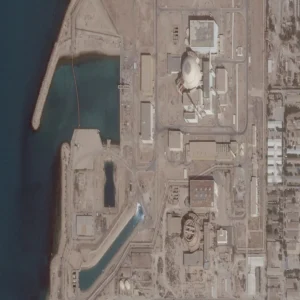
Nuclear- Iran is believed to have established a new uranium enrichment facility within an underground section of its Isfahan nuclear complex, months after parts of the site were reportedly damaged during coordinated strikes by the United States and Israel. However, global nuclear inspectors say they are still unable to confirm whether the facility is functional or remains unused.
Limited access leaves key questions unanswered
The International Atomic Energy Agency (IAEA), the United Nations’ nuclear monitoring body, has indicated that a lack of direct access to the site has prevented a clear assessment of its status. Director General Rafael Grossi said inspectors have yet to visit the underground area, making it difficult to determine its purpose or level of development.
Speaking during a visit to Washington, Grossi noted that the agency has several unresolved questions regarding the facility. He stressed that only an on-site inspection would clarify whether the structure is operational or simply an unfinished space.
Missed inspection after regional conflict
Iran had formally notified the IAEA about the new enrichment location in June 2025. Inspectors were scheduled to examine the site later that month, but the visit was called off after military strikes hit the Isfahan complex at the start of a 12-day conflict involving Israel.
Due to the cancellation, the agency remains uncertain about what lies inside the underground facility. It could be an empty hall, a partially prepared installation with infrastructure for centrifuges, or a site where enrichment equipment has already been deployed.
Enriched uranium stockpile remains a concern
The IAEA has previously reported that a significant portion of Iran’s uranium enriched to 60 percent purity—just below weapons-grade—was stored in tunnel systems at Isfahan. According to Grossi, much of this material is believed to still be located there.
Before the June strikes, the agency estimated that Iran possessed approximately 440.9 kilograms of uranium enriched to that level. If further processed, this quantity could theoretically produce material sufficient for multiple nuclear weapons, based on international benchmarks.
More recent assessments suggest that over 200 kilograms of this enriched uranium was present at Isfahan during the last inspection. While some material stored at other locations may have been affected during the attacks, there is no clear evidence indicating large-scale movement of the stockpile.
Satellite monitoring shows little activity
Grossi pointed out that both the IAEA and independent observers have been monitoring the site using satellite imagery and other tools. So far, there have been no visible signs that the enriched uranium has been relocated.
This lack of detectable movement has led to the general assumption that the material remains at its previous storage locations. However, without physical verification, uncertainty continues to surround the situation.
Tensions persist over Iran’s nuclear ambitions
The United States and Israel have cited Iran’s nuclear activities as a major security concern, arguing that the country is approaching the technical capability to produce nuclear weapons. Tehran, however, maintains that its nuclear programme is intended solely for civilian purposes.
Despite earlier claims by former US President Donald Trump that military strikes had significantly disrupted Iran’s nuclear capabilities, the IAEA has stated that it has found no definitive evidence of an active, coordinated weapons programme.
Safety concerns after recent strikes
Amid ongoing tensions, reports have emerged from Iran and Russia suggesting that a projectile recently struck near the Bushehr nuclear power plant, raising fears of a possible radiological risk. However, the IAEA has confirmed that no damage or injuries have been recorded at the site.
Additionally, entrances to the underground enrichment facility at Natanz—another key nuclear location—were reportedly targeted during earlier military operations. The full extent of the impact on Iran’s nuclear infrastructure remains under evaluation.