Minneapolis: Fatal Shooting Sparks Nationwide Debate on Immigration Enforcement and Civil Rights
Minneapolis: A fatal shooting involving a US immigration enforcement officer and an American woman on the streets of Minneapolis has ignited widespread outrage, public protests, and renewed national debate over federal immigration practices. The incident, which occurred in broad daylight, quickly escalated from a routine enforcement action into a tragic event that has left one woman dead and a community deeply divided. Conflicting accounts from federal authorities and local leaders have further intensified public scrutiny and distrust.
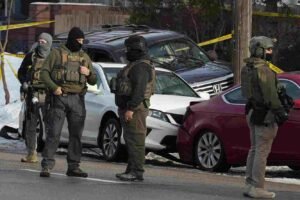
Incident Overview and Immediate Aftermath
According to eyewitness accounts and video footage shared widely on social platforms, the woman was inside her vehicle when multiple federal agents surrounded her car. As she attempted to drive away, an officer fired several shots at close range. The vehicle then veered out of control and crashed into nearby parked cars. Onlookers could be heard shouting in shock and anger as the scene unfolded. Moments later, the woman was found critically injured inside the damaged vehicle and was later pronounced dead.
The incident occurred during a period of heightened tension in the city, where immigration enforcement activities had already triggered demonstrations. Within hours, the shooting became a flashpoint for anger directed at federal agencies operating in local neighborhoods.
Conflicting Narratives From Authorities
Federal officials claimed the officer acted in self-defense, alleging that the woman attempted to use her vehicle as a weapon. They described the incident as an act of domestic extremism and insisted that the use of force was justified under the circumstances. These claims were immediately challenged by local leaders, who accused federal agencies of spreading misinformation and attempting to control the narrative before a full investigation could take place.
City and state officials publicly rejected the federal version of events, calling for transparency and accountability. They emphasized the need for an independent investigation and criticized the rapid labeling of the victim as a threat without clear evidence.
Public Protests and Community Reaction
The shooting triggered massive protests across Minneapolis, despite harsh winter conditions. Demonstrators filled the streets carrying signs demanding the removal of federal immigration agents from the city. Many residents expressed fear, anger, and frustration, arguing that aggressive enforcement tactics have made communities less safe rather than more secure.
Local activists and civil rights groups condemned what they described as militarized policing and excessive use of force. For many protesters, the incident symbolized broader concerns about unchecked authority, racial profiling, and the erosion of civil liberties under aggressive enforcement policies.
Questions Around Training and Accountability
The incident has also revived concerns about the training and oversight of immigration enforcement officers. In recent years, federal agencies have expanded recruitment efforts to significantly increase the number of officers in the field. Critics argue that rapid expansion has come at the cost of proper training, de-escalation skills, and accountability measures.
Witnesses at the scene described chaotic conditions, including officers refusing medical assistance from bystanders who identified themselves as healthcare professionals. Such accounts have fueled demands for clearer protocols on use of force and emergency response during enforcement operations.
Political and Policy Implications
The shooting comes amid a broader national push to intensify immigration enforcement, with federal authorities prioritizing mass arrests and deportations. This approach has drawn sharp criticism from state and city governments that favor more community-oriented policies. The growing divide between federal objectives and local governance has created legal and political tensions that remain unresolved.
State leaders have pledged a thorough and impartial investigation, stating that public trust depends on transparency and justice. The outcome of this case is expected to have far-reaching implications, potentially influencing future enforcement strategies and federal-local cooperation.
Human Impact and Ongoing Investigation
Beyond political debate, the human cost of the incident remains at the center of public concern. Family members described the victim as frightened and confused in her final moments, rejecting claims that she posed a threat. Their statements have resonated deeply with the public, reinforcing calls for empathy and restraint in law enforcement actions.
As investigations continue, the Minneapolis shooting stands as a stark reminder of the consequences of high-tension enforcement operations conducted in civilian spaces. The case has not only shaken one city but has also reignited a nationwide conversation about public safety, immigration policy, and the limits of state power.