Iran – Elite Counterterrorism Unit Assigned to Guard New Supreme Leader
Iran – Tehran has reportedly taken extraordinary security steps to safeguard Iran’s newly appointed Supreme Leader, Ayatollah Mojtaba Khamenei, after the killing of his father, Ayatollah Ali Khamenei, in what has been described as a joint US-Israeli military operation known as Operation Epic Fury. The reported strike on February 28 also claimed the lives of several members of the elder Khamenei’s family, intensifying concerns about the safety of the country’s new top cleric.
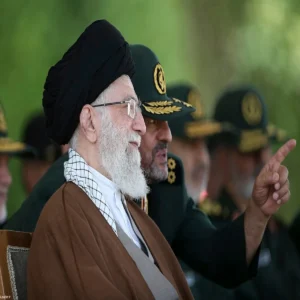
Elite Security Unit Assigned for Protection
According to multiple media reports, Iran’s highly trained Counterterrorism Special Force, commonly known as NOPO, has been tasked with protecting Mojtaba Khamenei. The 56-year-old cleric has remained out of public view since being elevated to the position of Supreme Leader on Sunday.
The deployment was highlighted in a report citing Ali Safavi, a member of the Foreign Affairs Committee of the Paris-based National Council of Resistance of Iran. Safavi said the special force, known for its strict loyalty to the Iranian leadership, is now responsible for securing the new leader following the death of his father.
Background of the NOPO Unit
The NOPO force was established in 1991 and operates under Iran’s Special Units Command. Widely considered among the most capable tactical forces within Iranian policing, the unit was originally designed to handle hostage rescue operations and other high-risk security missions.
Over the years, however, the group has gained attention for its role in controlling internal unrest. The unit has reportedly been deployed during several major episodes of domestic protests, including the 1999 student demonstrations, the nationwide unrest in 2019, and the protests following the death of Mahsa Amini. Human rights organizations have accused the force of playing a central role in suppressing dissent during these events.
Structure and Capabilities
Safavi explained that NOPO is an acronym derived from the Persian phrase Nirouyeh Vijeh Pasdaran Velayat, which translates roughly to Special Force for the Protection of the Leadership. While the term velayat broadly refers to the governing system, the unit has historically focused on safeguarding the Supreme Leader and key figures within the political establishment.
The force is believed to consist of six brigades in total. Four are reportedly based in Tehran, while the remaining units operate in the cities of Mashhad and Isfahan. Analysts say the group is known for rigorous training, advanced equipment, and a strict chain of command.
According to Safavi, the unit has traditionally been viewed as one of the most trusted security bodies responsible for protecting the country’s highest authority.
Security Concerns Following Assassination
Reports indicate that some members of the unit may have been killed during the strike that targeted Ali Khamenei. Despite potential casualties, observers say the force remains fully operational and is actively engaged in heightened security measures across the country.
In recent days, large numbers of NOPO personnel have reportedly been deployed around detention centers holding political prisoners, a move interpreted by some analysts as an attempt to prevent possible unrest during the sensitive leadership transition.
Conflicting Reports on Mojtaba Khamenei’s Condition
Speculation has also circulated regarding Mojtaba Khamenei’s health following the February 28 attack. Some reports claimed the cleric was injured during the strike that killed his father.
However, those claims were dismissed by officials close to the Iranian leadership. Yousef Pezeshkian, son of Iran’s president and a government adviser, said that inquiries confirmed the new leader was unharmed.
In a message shared through his Telegram channel, Pezeshkian stated that contacts within the government had assured him that Mojtaba Khamenei was “safe and sound.”
Earlier reports citing unnamed Iranian officials suggested that he may have sustained minor injuries but was alert and sheltering in a secure location with limited communication.
Leadership Transition and Political Implications
Iran’s Assembly of Experts formally appointed Mojtaba Khamenei as the third Supreme Leader of the Islamic Republic on March 8. His selection followed urgent deliberations after the assassination of his father.
Several reports have suggested that Iran’s powerful Revolutionary Guards strongly supported his appointment, viewing him as a leader likely to maintain continuity with existing hardline policies.
Political analysts say the decision could significantly influence both Iran’s domestic governance and its foreign policy posture in the coming years. Some observers believe the growing influence of the Revolutionary Guards within the political system may lead to stronger security control at home and a more assertive stance abroad.
For now, the country’s leadership remains focused on maintaining stability during the transition, while security forces continue to tighten protection around the newly installed Supreme Leader.