MosqueNaming – Supreme Court Rejects Plea to Ban Babur References
MosqueNaming – The Supreme Court on Friday declined to consider a petition seeking a nationwide prohibition on constructing or naming any mosque or religious structure after Mughal emperor Babur or the historic Babri Masjid.
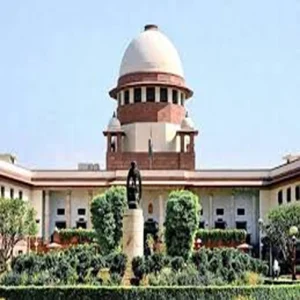
The matter was placed before a bench comprising Justices Vikram Nath and Sandeep Mehta. After a brief hearing, the judges made it clear that they were not inclined to entertain the plea. Following the court’s observation, the petitioner’s counsel chose to withdraw the petition.
Court Declines to Intervene
During the proceedings, the petitioner’s lawyer referred to a public statement allegedly made by suspended Trinamool Congress MLA Humayun Kabir about building a structure modeled on the Babri Masjid in Murshidabad district of West Bengal. The submission was cited as part of the grounds for seeking judicial intervention.
However, the bench did not engage with the merits of the claims. Instead, it indicated its unwillingness to proceed with the case, prompting the withdrawal of the plea. No detailed order examining the substantive issues was passed, as the petition was not formally admitted for hearing.
What the Petition Demanded
The plea had asked the apex court to direct the Union government, state governments, and relevant authorities to prevent the construction, establishment, or naming of any mosque or religious building in the name of Babur or Babri Masjid, including any variation of those names, anywhere in the country.
In its submissions, the petitioner described Babur as an invader and alleged that historical references portrayed him as having made derogatory remarks about Hindus. On this basis, the petition sought action to restrain what it termed as attempts to glorify or commemorate the Mughal ruler through religious structures.
The court, however, did not examine these historical assertions or broader arguments, as the matter did not proceed beyond the preliminary stage.
Background of the Ayodhya Verdict
The issue of Babri Masjid remains closely tied to the landmark 2019 judgment delivered by the Supreme Court in the long-standing Ayodhya dispute. In that verdict, the court allowed the construction of a Ram temple at the contested site in Uttar Pradesh’s Ayodhya.
At the same time, the bench in the 2019 ruling described the demolition of the Babri Masjid in December 1992 as a serious violation of the rule of law. The court held that the destruction of the structure could not be justified under any circumstance.
To balance the interests of the Muslim community, the judgment directed that five acres of suitable land be allotted at a prominent location in Ayodhya for the construction of a mosque. The allocation was to be facilitated by the government.
No Immediate Legal Impact
Legal observers note that Friday’s decision does not alter the framework established by the 2019 Ayodhya verdict. By declining to entertain the fresh plea, the Supreme Court effectively left questions related to naming or constructing religious buildings to existing legal and administrative processes, rather than issuing a blanket directive.
The withdrawal of the petition means there will be no further hearings on this specific request unless a new plea is filed in the future. For now, the court has signaled that it does not see grounds for intervening in matters concerning the naming of religious structures linked to historical figures.
The development underscores the judiciary’s cautious approach in handling issues that intersect with faith, history, and public sentiment, particularly when previous constitutional bench rulings have already addressed related disputes.