Meghalaya – Deadly Blast at Illegal Coal Mine Kills 18 Workers
Meghalaya – At least 18 workers lost their lives on Thursday morning after a powerful blast ripped through an illegal coal mine in Meghalaya’s East Jaintia Hills district, according to local authorities. The explosion is suspected to have been caused by dynamite used inside the mine, which was operating in violation of a long-standing ban on unsafe mining practices.
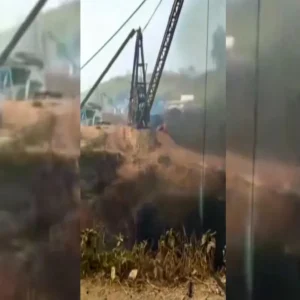
The incident occurred at Mynsyngat village in the Thangsku area, which falls under the Umpleng Police Outpost. Officials said several labourers were inside the mine’s narrow underground passages when the explosion took place. Those working at the site included residents from nearby villages as well as migrant workers from neighbouring states.
Rescue Efforts Halted Due to Dangerous Conditions
East Jaintia Hills Superintendent of Police Vikash Kumar confirmed the incident and said rescue operations were called off late Thursday evening. He explained that poor visibility after nightfall, combined with unstable underground conditions, made further efforts unsafe. Authorities were also concerned about the presence of toxic gases such as carbon monoxide and methane that may have accumulated inside the mine following the blast.
By the end of the day, rescue teams had recovered 18 bodies from the site. Officials said operations would resume only after safety assessments confirm that conditions underground no longer pose a risk to emergency personnel.
Banned Mining Practice Still Widely Used
The mine where the explosion occurred was reportedly using rat-hole mining, a method prohibited for more than a decade due to safety and environmental concerns. This technique involves digging small vertical pits, typically just three to four feet wide, until a coal seam is reached. From there, workers carve out horizontal tunnels to extract coal by hand.
These cramped tunnels, often barely large enough for a single person, have given the method its name. Extracted coal is usually piled near the mine entrance before being transported by road. The work is done with basic tools and without proper structural support, making the process extremely dangerous.
High Risks for Workers and Children
Rat-hole mining has long been associated with serious safety hazards. The absence of mechanised equipment and reinforcement increases the risk of tunnel collapses, flooding, explosions and suffocation. Despite these dangers, the method became widespread in Meghalaya because the region’s thin coal seams make large-scale mechanised mining difficult and costly.
The small size of the tunnels has also led to the exploitation of children. Over the years, there have been multiple reports of minors working in these mines, sometimes posing as adults to secure jobs. In areas with limited employment opportunities, many families have depended on this risky work for survival.
History of Accidents and Legal Action
In 2014, the National Green Tribunal imposed a ban on rat-hole mining and other unscientific mining methods in Meghalaya. The decision cited extensive environmental damage, including polluted groundwater, degraded farmland and severe threats to human life. The tribunal also restricted the transport of coal extracted through illegal operations.
Despite the ban, enforcement has remained a challenge. Fatal accidents have continued to occur, often involving flooding or lack of oxygen inside the tunnels. In December 2018, 15 miners were trapped in a flooded rat-hole mine in East Jaintia Hills. After a prolonged rescue effort lasting more than two months, only two bodies were recovered. A similar incident in 2021 left five miners trapped, with three bodies eventually found before rescue attempts were abandoned.
Ongoing Debate Over Mining in Meghalaya
Coal mining remains an important source of income in Meghalaya, making the ban politically and economically sensitive. The state government has argued that alternative mining methods suited to the region’s geology are limited. A committee appointed by the Meghalaya High Court in 2022 reported that illegal rat-hole mining was still widespread despite legal restrictions.
The Supreme Court later upheld the ban, permitting coal extraction only under scientifically regulated procedures with strict environmental safeguards. Authorities continue to face pressure to balance economic needs with worker safety and environmental protection.