Elections – Meghalaya Delays GHADC Polls After Violence in West Garo Hills
Elections – Violence linked to the upcoming elections of the Garo Hills Autonomous District Council has created a tense atmosphere in Meghalaya’s West Garo Hills district, leaving two people dead and prompting strong security measures across the region. Authorities have since stepped in to restore order as unrest spread through several parts of the district.
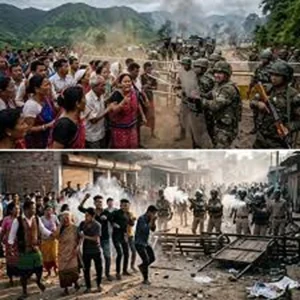
Clashes Erupt Ahead of District Council Elections
The tension began after confrontations broke out between members of the Garo community and supporters of non-tribal candidates planning to contest the council elections that were originally scheduled for April 10. What began as protests soon escalated into serious disturbances, with reports of stone throwing, arson and damage to property emerging from multiple locations.
Police officials confirmed that several public and political buildings were targeted during the unrest. Among them was the Tura office of the ruling National People’s Party, which was reportedly attacked by groups during the clashes. The incidents led to widespread anxiety among residents, prompting authorities to take immediate preventive measures.
Security Reinforcements and Internet Suspension
In response to the deteriorating situation, the Meghalaya government increased security deployment across sensitive areas in West Garo Hills. Additional police units were sent to maintain order, while mobile internet services were temporarily suspended to prevent the spread of rumours and misinformation that could worsen tensions.
The Army was also called in to conduct flag marches in key areas as part of efforts to reassure the public and discourage further violence. Officials said these visible security patrols were intended to stabilise the situation and restore confidence among local residents.
Government Postpones GHADC Elections
With the law and order situation remaining fragile, the state government decided to postpone the GHADC elections that had been scheduled for April 10. Chief Minister Conrad K Sangma said the decision followed a detailed review of the ground situation and discussions with security agencies and local authorities.
According to the chief minister, holding the election under such conditions would have posed serious challenges for both voters and administrative staff. Officials indicated that new dates for the elections will be announced once the security situation improves and normalcy returns to the district.
Chief Minister Refuses to Leave Residence Despite Threats
Amid the unrest, Chief Minister Sangma revealed that he had received intelligence inputs suggesting that some groups were planning to target his residence. According to the information shared with him, individuals were reportedly moving toward his home with the intention of attacking the property and threatening his family.
Security personnel advised him to temporarily relocate as a precautionary measure, following standard safety protocol. However, Sangma stated in a video message that he chose to remain at his residence and did not agree to move to another location despite the warning.
He said his decision was based on personal conviction and confidence in facing the situation without fear.
Dispute Over Candidate Eligibility
The unrest is closely connected to an ongoing dispute regarding eligibility to contest the GHADC elections. Earlier, the Garo Hills Autonomous District Council issued a notification stating that candidates must possess a Scheduled Tribe certificate to file nominations. This effectively prevented non-tribal residents from contesting the polls.
The move triggered protests in several areas of the plains belt where non-tribal communities form a significant portion of the population. The controversy intensified after the Meghalaya High Court struck down the notification, stating that such a requirement could not be implemented through an executive order without proper legislative approval.
The court’s decision added further complexity to the already sensitive debate surrounding tribal political representation in the autonomous district councils of the state.
Impact on Daily Life and Education
The unrest has also disrupted normal life in West Garo Hills. Authorities postponed two Class 12 board examinations in the district due to security concerns and ongoing curfew restrictions. Students and parents were informed that revised examination dates would be announced later.
In several neighbourhoods, residents reportedly organised night-time patrols to protect their communities after incidents of property damage and looting during the clashes. Meanwhile, curfew restrictions continue in certain areas, although limited relaxations have been granted in parts of neighbouring East Garo Hills to allow essential movement.
Authorities Appeal for Calm
Government officials and police authorities have urged residents to remain calm and avoid spreading rumours that could inflame tensions further. Security personnel continue to monitor the situation closely while maintaining patrols across the affected areas.
Although the district remains tense, officials say the situation is gradually coming under control. The administration has assured citizens that steps are being taken to restore stability so that democratic processes, including the GHADC elections, can proceed peacefully in the future.