Elections – Assam’s Political Shift Since 2016 and Road to 2026 Vote
Elections – Assam political landscape transformation and upcoming assembly election focus – The 2016 Assembly election in Assam marked a decisive shift in the state’s political direction, ending a long period of Congress dominance and ushering in a new era under the Bharatiya Janata Party (BJP).
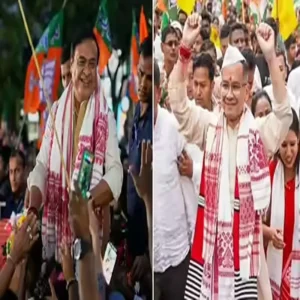
End of Congress Era After Fifteen Years
For over a decade and a half, Assam’s political scene was shaped by the Congress government led by then Chief Minister Tarun Gogoi. Since 2001, the party had maintained a steady hold on power. However, by 2016, growing public concerns and changing voter priorities created space for a major political change. The election results reflected this shift clearly, as Congress saw a sharp decline in support and managed to secure only 26 seats in the 126-member assembly.
BJP’s Breakthrough Victory and Alliance Strength
The BJP, under the leadership of Sarbananda Sonowal, emerged as the single largest party in the 2016 elections. Contesting 89 seats, it won 60, a remarkable rise from just five seats in 2011. The party’s campaign focused on key issues, including illegal immigration, governance, and development, which resonated strongly with voters.
Although the BJP fell short of the majority mark of 64 on its own, it comfortably formed the government with the support of its regional allies. The Asom Gana Parishad (AGP) secured 14 seats, while the Bodoland People’s Front (BPF) added another 12. Together, the alliance commanded a strong majority with 86 seats, firmly establishing BJP’s first government in Assam.
Decline of Other Political Players
The 2016 election also highlighted the weakening position of several other parties. The Communist Party of India (Marxist), which contested 19 seats, failed to win any, receiving only a small share of the total votes. Even in areas previously considered favorable to the Left, the party could not maintain its presence.
Meanwhile, Congress attempted to strengthen its position by aligning with the United People’s Party Liberal (UPPL), particularly in regions where the BPF had influence. However, this strategy did not yield the expected results, as voters largely shifted towards the BJP-led alliance.
Continuation of BJP’s Hold in 2021
The political trend established in 2016 continued into the next Assembly elections in 2021. The BJP once again secured 60 seats, maintaining its strong foothold in the state. With the backing of its allies, the party retained power and formed the government for a second consecutive term.
Following the victory, Himanta Biswa Sarma took over as the 15th Chief Minister of Assam, marking a leadership transition within the party while keeping its governance strategy intact. The results reinforced BJP’s growing influence in the northeastern region.
Focus Turns to 2026 Assembly Elections
Assam is now preparing for another crucial electoral contest in 2026, with voting scheduled to take place in a single phase on April 9. The upcoming election is expected to draw significant attention, as the BJP aims to secure a third consecutive term in the state.
Political observers are closely watching how parties position themselves ahead of the vote, especially in terms of alliances, campaign strategies, and voter outreach. While the BJP seeks to consolidate its gains, opposition parties are likely to intensify efforts to regain lost ground.
The outcome of the 2026 election will not only determine the immediate political future of Assam but may also influence broader political trends in the northeastern region.