Court examines bill assent delays: Can Governors Sit on Bills Forever, Supreme Court to Decide Soon
Court examines bill assent delays: Regarding the deadlines for the president and state governors to consent to legislative acts under Articles 200 and 201 of the Constitution, the Supreme Court on Thursday postponed its decision in the case brought by President Droupadi Murmu under Article 143.
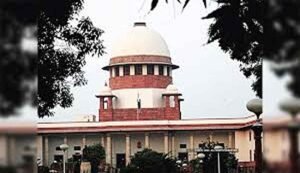
A bench of five judges, including the Chief Justice, heard the case for 10 days
According to a story in Live Law, the case was heard for 10 days by a bench that included Chief Justice of India BR Gavai, Justice Surya Kant, Justice Vikram Nath, Justice PS Narasimha, and Justice AS Chandurkar.
This reference was made after the incident involving the Tamil Nadu Governor
The statement was made in May in response to a two-judge bench ruling in the case of Tamil Nadu Governor RN Ravi, which dealt with constitutional authorities’ protracted inaction on state legislature-passed measures.
There is no reconsideration, but broader constitutional questions are being discussed
As the bench has repeatedly said, the present session was not about reconsidering that decision but rather about providing answers to more general constitutional problems.
the issue has already been resolved
Tamil Nadu, Kerala, Punjab, and West Bengal were among the states that questioned the need for the referral, claiming that these concerns had already been covered in the previous ruling. The Court did, however, examine whether governors may permanently postpone assent without returning laws, cautioning that doing so could jeopardize the legitimacy of elected governments.
The prescribed time limit may lead to infringement of powers
On behalf of the Union government, Attorney General R. Venkataramani and Solicitor General Tushar Mehta were against set timetables. They said that judicially establishing timelines might violate the separation of powers since the Constitution gives the president and governors authority.
Senior counsel, however, such as Gopal Subramanium (for Karnataka), Dr. A.M. Singhvi (for Tamil Nadu), K.K. Venugopal (for Kerala), and Kapil Sibal (for the State of West Bengal), backed time-bound measures, arguing that delays undermine legislative and federal principles.
Senior Advocate Mahesh Jethmalani (for the State of Chhattisgarh), Senior Advocate Harish Salve (for the State of Maharashtra), and others made arguments in favor of the Union’s stance.