Aviation – IndiGo Delhi–Manchester Flight Returns Mid-Air After Airspace Closure
Aviation – An IndiGo aircraft travelling from Delhi to Manchester was forced to abandon its journey and head back to India after spending several hours in the air, following sudden airspace restrictions connected to the escalating situation in West Asia.
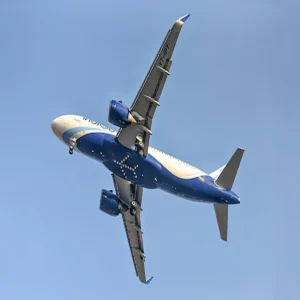
Flight Turns Back After Seven Hours in the Air
The aircraft, operating as flight 6E33 and managed by Norse on behalf of IndiGo, had departed from Delhi early Monday morning. After flying for nearly seven hours, the plane reversed its course near the border region between Ethiopia and Eritrea. Flight tracking platform Flightradar24 showed the aircraft beginning its return journey toward the Indian capital shortly after reaching that point.
Passengers onboard had expected to reach Manchester in the United Kingdom after a typical journey of around 11 hours. However, the flight was interrupted midway when new airspace limitations were imposed during the journey.
Route Had Already Avoided Conflict Zones
Flight tracking data indicates that the aircraft had been following a modified path designed to avoid sensitive areas in the Middle East. Instead of passing through traditional routes over the region, the plane travelled southward through the Gulf of Aden and parts of eastern Africa.
This alternative routing was chosen to bypass airspace linked to the ongoing Iran–Israel tensions. Despite these precautions, evolving restrictions across several air corridors ultimately made it impossible for the aircraft to continue safely toward Europe.
The sudden reversal highlights the challenges airlines face when geopolitical developments rapidly alter permitted flight paths.
Airline Confirms Safety-Based Decision
In a statement released after the incident, IndiGo confirmed that the return was prompted by newly imposed airspace limitations.
The airline explained that the situation in and around the Middle East remains fluid, and aviation authorities are continuously issuing updated guidelines that airlines must follow.
According to the airline’s spokesperson, flight 6E033 had to return to its departure point because last-minute restrictions made the originally planned routing unviable.
The spokesperson also noted that safety remains the airline’s highest priority, including the well-being of passengers, flight crew and the aircraft itself.
Authorities Reviewing Possibility of Continuing Journey
IndiGo said it is coordinating with relevant aviation authorities and international regulators to determine whether the journey can resume or if passengers will be accommodated on alternative travel arrangements.
The airline did not immediately provide details on how long the aircraft would remain in Delhi or when the Manchester service might operate again.
Such operational disruptions are not uncommon when geopolitical tensions affect international aviation corridors. Airlines must often modify routes, delay departures, or cancel flights depending on airspace advisories.
Long-Haul Route Recently Resumed
The Delhi–Manchester connection had only recently resumed operations after a pause, with the latest service marking IndiGo’s return to the route since February 26.
According to aviation data, the great-circle distance between Delhi and Manchester is roughly 6,829 kilometres. Under normal conditions, flights between the two cities typically take about 11 hours, depending on routing patterns and weather conditions.
Regional Conflict Influencing Global Aviation
Air travel across parts of West Asia has been under pressure due to the ongoing conflict involving Iran, Israel and allied forces.
The conflict intensified after joint military strikes by the United States and Israel targeted Iran on February 28, reportedly resulting in the death of Iran’s Supreme Leader Ayatollah Ali Khamenei. In the days that followed, Iran launched retaliatory attacks against Israeli targets and military facilities linked to the United States in Gulf countries.
The continuing exchange of strikes has raised security concerns across the region, prompting several countries and aviation regulators to impose temporary restrictions on portions of their airspace.
As a result, airlines operating long-haul routes between Asia and Europe are increasingly relying on longer or alternative pathways to maintain passenger safety.