Ajay Kumar: Rising Railway Fares Spark Political Debate Over Public Burden in India
Ajay Kumar: During a recent press conference, Congress leader Ajay Kumar strongly criticized the central government over the continuous increase in railway fares. Targeting the ruling Bharatiya Janata Party, he stated that instead of providing relief to citizens, the government has been placing additional financial pressure on ordinary people. According to him, fare hikes are being implemented quietly through internal circulars rather than transparent public announcements, which directly affects lower-income and middle-class families who rely heavily on train travel for daily and long-distance commuting.
Allegations of Repeated Fare Hikes
Ajay Kumar emphasized that this is the second time railway fares have been increased during the current term of the government. He claimed that since 2013, railway fares have gone up by nearly 107 percent, making train travel increasingly unaffordable. He further pointed out that AC two-tier ticket prices are now comparable to airline fares, which contradicts the traditional role of railways as an affordable mode of transportation for the masses.
Impact on Common Travelers
Highlighting everyday challenges, Ajay Kumar said that train delays have become common, while additional costs such as parking fees at railway stations and in cities have also surged. He alleged that the cumulative effect of these increases has made routine travel stressful and expensive. According to him, the government’s policies are steadily eroding the purchasing power of ordinary citizens without offering proportional improvements in service quality.
Senior Citizen Concessions and Social Concerns
One of the major concerns raised during the press conference was the withdrawal of senior citizen concessions. Ajay Kumar stated that the previous government had provided railway concessions worth thousands of crores to elderly passengers, which helped them travel with dignity and financial ease. He accused the current administration of removing these benefits without considering the social and economic impact on senior citizens who depend on affordable rail travel.
Criticism of Railway Leadership
Referring to the Union Railway Minister Ashwini Vaishnaw, Ajay Kumar used sharp language to criticize what he described as misleading communication around fare hikes. He alleged that small per-kilometer increases are presented as negligible, while in reality passengers end up paying significantly higher amounts per journey. According to him, such tactics hide the real financial burden placed on travelers and prevent informed public debate.
Rising Costs of Onboard Services
Ajay Kumar also drew attention to the steep rise in food prices within trains. He claimed that a basic meal that once cost a modest amount has now become several times more expensive. This increase, he argued, adds to the discomfort of passengers who already pay higher ticket prices. In addition, parking charges at stations have reportedly escalated sharply, further increasing the overall cost of travel.
Safety and Capacity Issues
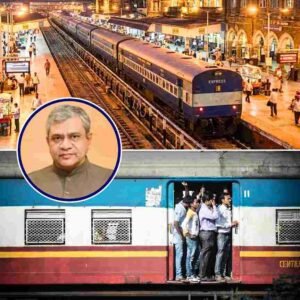
Another serious issue highlighted was overcrowding in general class coaches. Ajay Kumar referred to a recent incident of chaos at a railway station, attributing it to insufficient general class coaches despite a high number of tickets being sold. He argued that such mismanagement compromises passenger safety and reflects poor planning within the railway system.
Broader Political Message
Concluding his remarks, Ajay Kumar accused Prime Minister Narendra Modi’s government of making train travel increasingly inaccessible for common citizens. He claimed that railways, once considered the lifeline of the nation, are now being run with a profit-first mindset rather than public welfare. According to him, the opposition will continue to raise these issues to ensure accountability and transparency in public transport policies.
Conclusion
The press conference brought renewed attention to the debate over railway fare hikes, service quality, and social responsibility. As train travel remains a crucial part of daily life for millions, concerns about affordability, safety, and transparency are likely to remain central in political and public discussions in the coming months.