AirQuality – Yogi Adityanath Contrasts UP Air With Delhi Pollution
AirQuality – Uttar Pradesh Chief Minister Yogi Adityanath on Saturday drew a sharp comparison between air conditions in the national capital and his state, describing Delhi’s atmosphere as akin to a “gas chamber” while asserting that residents of Uttar Pradesh continue to breathe clean air despite ongoing development projects.
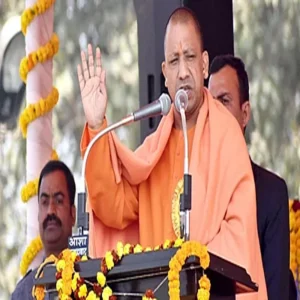
Remarks at Gorakhpur Inauguration Event
The Chief Minister was speaking in Gorakhpur during the inauguration of a renovated Block Development Officer’s office in Jungle Kauria. Addressing local residents and officials, he said environmental degradation has emerged as one of the most pressing global concerns of the present time.
Adityanath maintained that the situation in Uttar Pradesh remains stable and reassuring. According to him, the state has managed to pursue infrastructure growth without compromising environmental standards. He emphasized that cleaner surroundings contribute directly to better public health outcomes.
“The environment here is healthy and free from pollution,” he said. “When pollution levels remain low, the incidence of disease also declines. Polluted air primarily damages the lungs, and once oxygen supply is affected, the entire body experiences the consequences.”
Concerns Over Delhi’s Air Conditions
Turning his attention to the national capital, Adityanath described the challenges faced by residents in Delhi. He said that air pollution there has reached a level where breathing becomes uncomfortable and eye irritation is common.
He referred to medical advice often issued during high pollution periods, noting that doctors frequently recommend that elderly citizens, children, and people suffering from respiratory conditions such as asthma remain indoors. “What kind of life is it if people are advised not to step outside because of the air they breathe?” he asked.
His comments come at a time when Delhi’s air quality continues to fluctuate between concerning levels. According to data released by the Central Pollution Control Board (CPCB), the Air Quality Index in Delhi stood at 211 at 9 am on Saturday, placing it in the “poor” category.
Understanding the Air Quality Index
The Air Quality Index is a standardized indicator used to measure pollution levels and assess associated health risks. As per CPCB guidelines, an AQI reading between 0 and 50 is categorized as good, while 51 to 100 is considered satisfactory. Levels between 101 and 200 fall under moderate. A reading between 201 and 300 is labeled poor, 301 to 400 very poor, and 401 to 500 severe.
An AQI of 211 indicates that air quality may cause breathing discomfort to people with lung or heart conditions, children, and older adults. Authorities typically advise vulnerable groups to limit prolonged outdoor exposure when pollution levels reach this range.
Balancing Development and Environment
During his address, Adityanath underscored the need to ensure that economic progress does not come at the expense of environmental well-being. He said Uttar Pradesh is pursuing development while keeping environmental safeguards in place.
“We are fortunate that development activities here have not led to suffocating conditions,” he remarked, suggesting that careful planning and policy measures are essential to prevent deterioration in air quality.
Environmental experts have repeatedly highlighted that rapid urbanization, vehicular emissions, industrial activity, and seasonal factors contribute significantly to air pollution in large metropolitan areas such as Delhi. In recent years, both state and central authorities have introduced measures aimed at controlling emissions and improving air monitoring systems.
The Chief Minister’s remarks add to the ongoing national conversation about pollution management, sustainable growth, and public health. As cities expand and infrastructure projects accelerate, maintaining clean air remains a shared responsibility across governments, industries, and citizens.