Delhi Air Pollution: Delhi Air Pollution Crisis Draws Supreme Court’s Sharp Attention and Calls for Urgent Action
Delhi Air Pollution: The worsening air quality situation in Delhi has once again drawn serious concern from the Supreme Court of India. On Wednesday, the apex court strongly criticized the Delhi government and related authorities for their inability to effectively control pollution levels in the national capital. The court urged policymakers to move beyond temporary measures and instead focus on pragmatic and practical solutions that can bring real relief to residents. With smog engulfing the city and health risks rising, the issue has become not only an environmental challenge but also a public health emergency demanding immediate action.
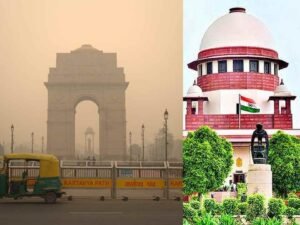
Rising Air Pollution Levels in the National Capital
According to data released by the Central Pollution Control Board, Delhi’s Air Quality Index was recorded at 329 on Wednesday morning. This level places the city firmly in the very poor category, indicating conditions that can cause respiratory discomfort to most people and serious health issues for sensitive groups. Although there was a slight improvement compared to previous days, the air remained unsafe, particularly for children, senior citizens, and individuals with existing health conditions.
A thick layer of smog covered several parts of the city, severely reducing visibility and disrupting daily life. Residents reported eye irritation, breathing difficulties, and persistent coughing. The situation also affected road and air travel, adding to the inconvenience caused by traffic congestion and delays.
Supreme Court’s Observations on Administrative Failure
During the hearing, the Supreme Court noted that authorities had completely failed to manage the pollution crisis despite repeated warnings over the years. The court stressed that seasonal explanations alone cannot justify the recurring problem, highlighting the lack of preparedness and long-term planning. It questioned why effective preventive steps were not taken well in advance, especially when pollution spikes have become a predictable annual event.
The bench also sought detailed responses from the Commission for Air Quality Management and the Municipal Corporation of Delhi regarding an application that identified traffic congestion at toll plazas as a significant contributor to pollution. According to the application, long queues of idling vehicles at entry points into Delhi worsen emissions and deteriorate air quality further.
Directives Issued to Ease Traffic and Pollution
To address traffic-related pollution, the Supreme Court directed the National Highways Authority of India and the Municipal Corporation of Delhi to consider either temporarily closing toll plazas or relocating them. The court observed that reducing congestion at city entry points could help lower vehicular emissions.
The Municipal Corporation of Delhi was given one week to take a final decision on whether these toll plazas could be shut temporarily. This move is expected to ease traffic flow and reduce pollution caused by vehicles waiting for extended periods.
Clarification on Vehicle Restrictions and Construction Ban
In a significant clarification, the Supreme Court reversed its earlier position and stated that only vehicles with BS4 engines would be exempted from certain restrictions. This decision aims to strike a balance between controlling pollution and avoiding unnecessary hardship for vehicle owners.
The court also addressed the impact of construction bans on workers. It directed the government to ensure alternative employment or financial support for laborers affected by restrictions on construction activities. This step reflects the court’s concern for livelihoods while enforcing environmental safeguards.
Schools, Health Advisory, and Long-Term Planning
Regarding school closures, the Supreme Court stated that it would not interfere with the government’s decision to shut schools up to Class 5. The court noted that the winter break was approaching and that protecting children’s health should remain a priority. Meanwhile, the state health department advised residents to limit outdoor activities until air quality improves.
The apex court also instructed the Commission for Air Quality Management to revisit and strengthen its long-term strategies. It emphasized that short-term emergency measures are insufficient and that comprehensive planning is essential to prevent the situation from worsening year after year.
Conclusion: Need for Sustainable Solutions
The Delhi pollution crisis highlights the urgent need for coordinated action, accountability, and sustainable policy implementation. While court directives can provide immediate relief, lasting improvement will depend on consistent enforcement, cleaner transportation options, better urban planning, and cooperation between central and state authorities. For millions of residents, clean air is not a luxury but a basic right that must be protected.